Turkey is one of the world's most geographically and culturally diverse destinations, straddling Europe and Asia, with snow-capped eastern mountains, sun-drenched Aegean coastlines, otherworldly Cappadocian rock formations, and the chaotic, magical streets of Istanbul. For travelers looking to explore without the stress of renting a car, navigating unfamiliar roads, or paying premium flight prices, Turkey's interconnected network of trains, buses, and ferries is a game-changer. It's affordable, scenic, and gives you a front-row seat to local life you'd never experience from a rental car or plane window. This 2026 guide covers everything you need to know to book, ride, and make the most of every transport mode across the country.
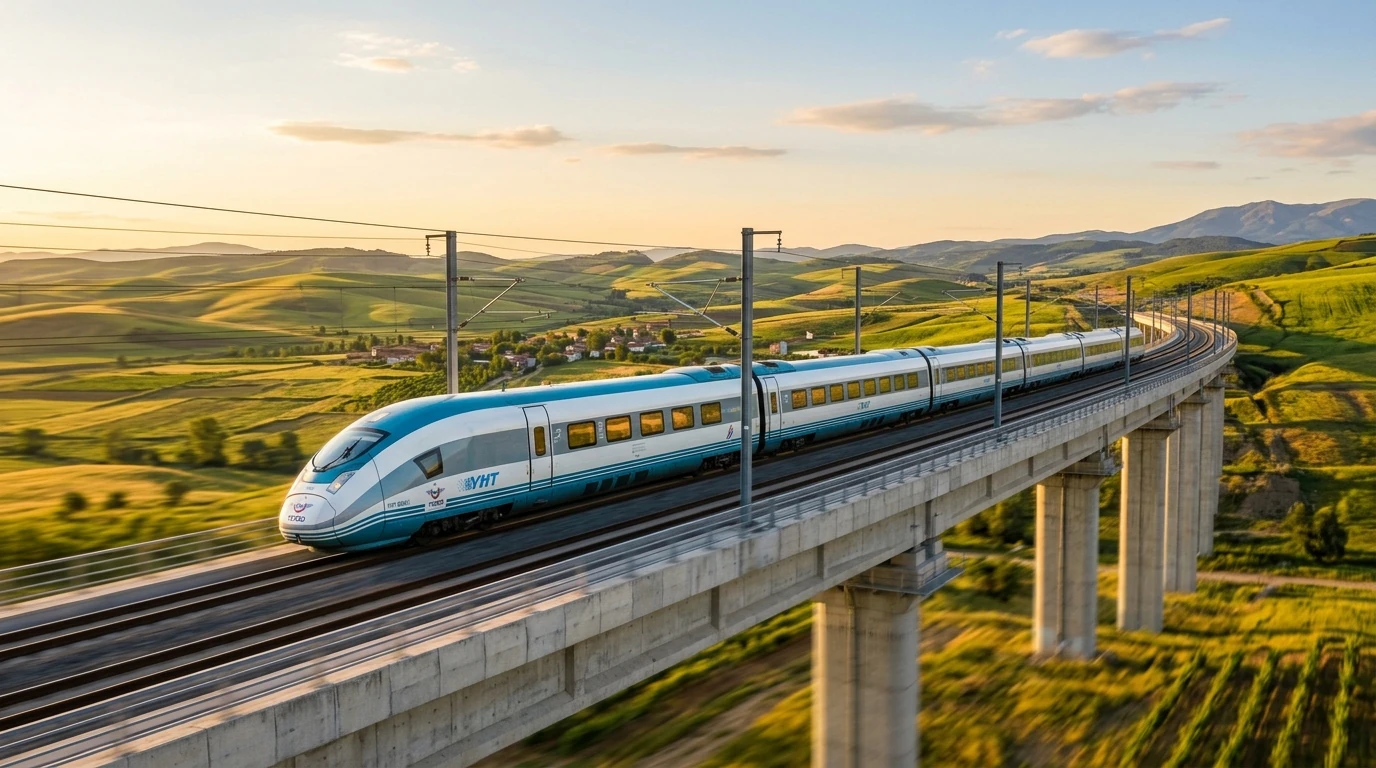
Table of Contents#
- Train Travel in Turkey
- Bus Travel in Turkey
- Ferry Travel in Turkey
- Budget and General Practical Tips
- How to Combine Transport Modes for a Perfect Itinerary
- Conclusion
- References
Train Travel in Turkey#
Turkey's rail network is operated by TCDD Tasimacilik (Turkish State Railways), with rapidly expanding high-speed routes and iconic scenic long-distance services that are a destination in their own right.
High-Speed YHT Trains#
The Yuksek Hizli Tren (YHT) is Turkey's flagship high-speed rail service, running at up to 250 km/h (155 mph) and cutting travel times between major cities in half compared to buses.
- 2026 new route updates: Two long-awaited spurs opened this year: the Yerkoy-Kayseri link (direct high-speed access to Cappadocia's closest major city) and the Bursa-Bandirma connection, making day trips from Istanbul to Bursa's historic markets easier than ever.
- Core existing routes: Istanbul-Ankara (4h15), Istanbul-Konya (4h40), Ankara-Konya (1h44), Ankara-Sivas
- Train types: 6-car CAF (Spanish-made) and 8-car Velaro (German Siemens) models, both with free WiFi and power outlets at every seat.
- Classes:
- Economy: Spacious 2+2 seating, affordable for all travelers
- Business: 2+1 extra-wide seating, complimentary tea/coffee, and a sandwich box served on board
- Luggage policy: 1 large bag up to 65x50x35 cm, or 2 carry-on bags up to 55x40x23 cm per passenger. A modest extra-luggage fee (approximately EUR 3) applies for oversized bags, payable at the boarding gate with cash or card.
- Departure points in Istanbul: Most services leave from Sogutlucesme station (Asian side), with select trains running through the Marmaray Tunnel to Halkali (western European side) for easier access for travelers staying in the old city or Beyoglu.
Practical use case: If you're traveling from Istanbul to Cappadocia in 2026, take the 4.5-hour YHT to Kayseri instead of a 10-hour overnight bus, then take a 1-hour shared shuttle to Goreme for a faster, more comfortable journey.
Classic Long-Distance Trains#
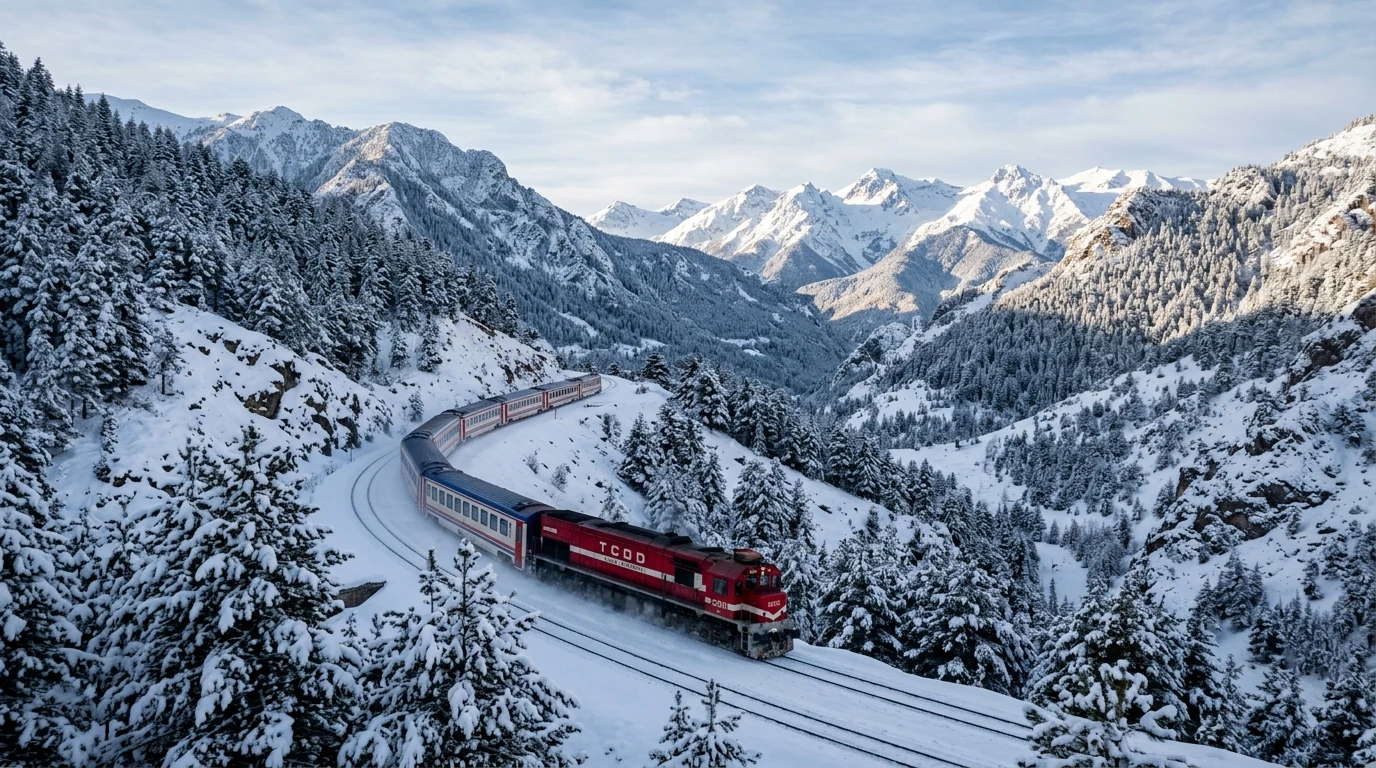
For slower, more scenic travel, TCDD's classic long-distance services use modern, air-conditioned TVS2000 coaches with multiple accommodation options:
- Pullman seats: 1+2 layout with extra legroom for day trips, more spacious than any bus seat
- Sleeping cars (yatakli wagon): 1 or 2-bed private compartments with in-room washbasin, complimentary mineral water, soft drinks, and snacks. Ideal for overnight routes.
- Couchettes (kuset): 4-bunk shared compartments with sheets, blanket, and pillow for budget travelers
- Key routes: Ankara-Izmir, Ankara-Kars, Ankara-Adana, Istanbul-Ankara sleeper
- Amenities: Most routes have restaurant cars (yemekli vagon) serving hot Turkish food, snacks, and non-alcoholic drinks. No alcohol is served on any TCDD trains.
- Iconic scenic routes:
- Dogu Express (Eastern Express): 24-hour Ankara to Kars route, named one of the world's most epic train journeys by National Geographic, winding through eastern Turkish mountain ranges and remote villages.
- Roses Express: Izmir to Isparta route, running through rose fields in the Taurus Mountains in late spring.
Common mistake to avoid: The Dogu Express sells out 4-6 weeks in advance, especially in peak summer and fall foliage seasons. Never wait until the last minute to book this route. Consider using an agency like Amber Travel (ambertravel.com) which can secure berths as soon as reservations open.
How to Book Train Tickets#
- Official booking site: ebilet.tcddtasimacilik.gov.tr. Reservations open 60 days before departure, and the site accepts non-Turkish credit cards. The site has an English language option. Note: A VPN set to Turkey may be required to access some TCDD pages.
- Discounts: 15% off for seniors (60+) and youth (under 26) with valid ID. Only Turkish citizens over 65 qualify for the 50% discount.
- Alternative booking options: Local agencies like Amber Travel and Backpackers Travel in Istanbul (Yeni Akbiyik Caddesi No. 30, Sultanahmet) can book tickets for you for a small fee if you run into issues with the official site. You can also buy tickets directly at train stations with Turkish lira cash or a credit card.
- Pro tip: Return tickets are 20% cheaper than two one-way tickets, so book round trips if your travel dates are fixed.
Sample Train Fares#
Turkey has high inflation, so fares and exchange rates change frequently. Always confirm current prices at the TCDD booking site before traveling. Approximate 2025-2026 fares:
| Route | Economy | Business | Sleeper (2-bed, per person) |
|---|---|---|---|
| Istanbul-Ankara (YHT) | TL 780-860 | TL 1,170-1,290 | TL 1,700-1,870 |
| Istanbul-Konya (YHT) | TL 700-770 | TL 1,050-1,155 | - |
| Ankara-Kars (Dogu Express) | - | - | TL 2,000-2,100 |
Children under 8 go free, children 8-11 travel at half fare, and those 12 and over pay the youth fare.
Bus Travel in Turkey#
Buses are the most popular way to travel across Turkey, with coverage to every small town and village that trains don't reach, and near-constant departures between major cities.
Bus Service Overview#
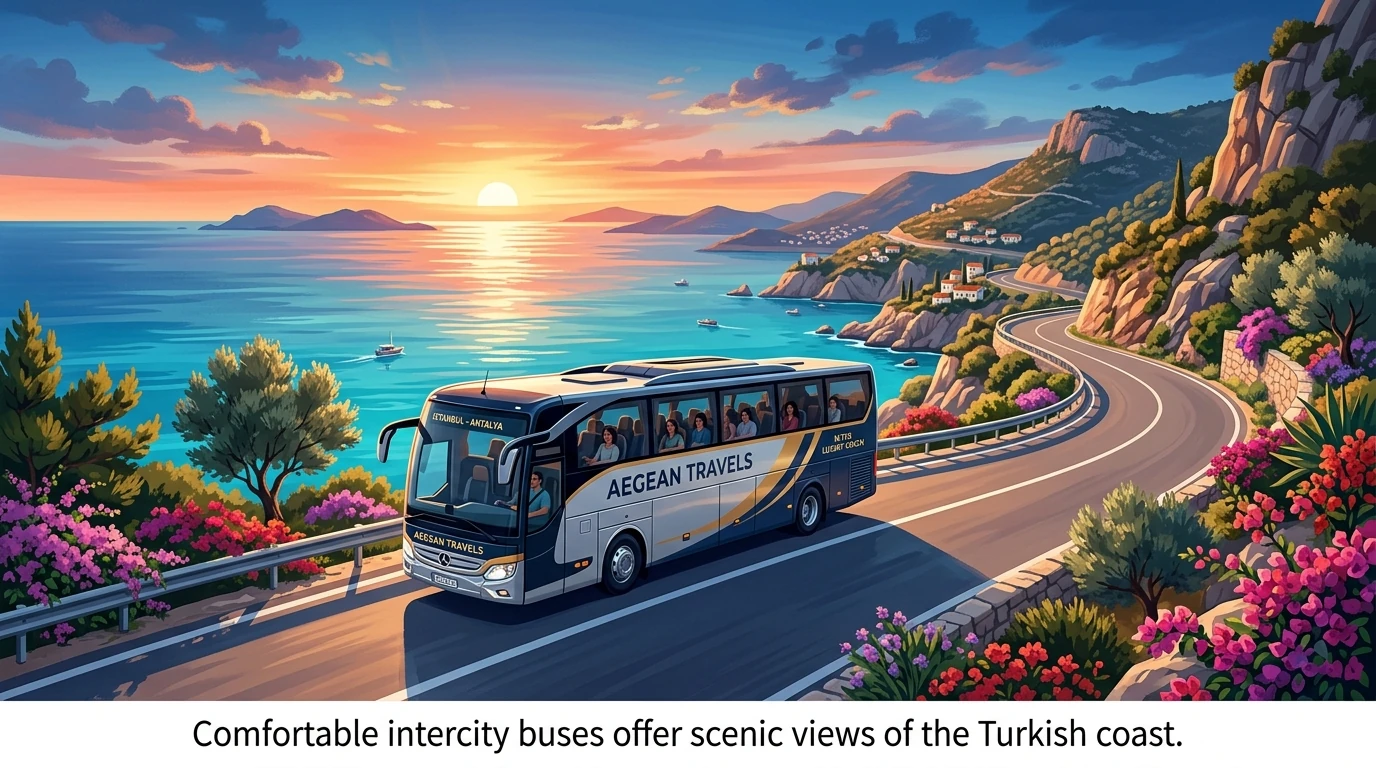
Turkish intercity buses are among the most modern and comfortable in the world, with standard amenities including:
- Air conditioning, personal entertainment screens, free WiFi, and power outlets
- Complimentary snacks, soft drinks, and tea/coffee served by an on-board steward
- 2+1 seating configuration (2 seats on the right, 1 on the left per row) for extra legroom, far more spacious than standard European buses
- No on-board toilets, but scheduled rest stops (called mola) every 2-2.5 hours at well-equipped service stations with restaurants, shops, and clean restrooms
- Ultra-frequent departures: For example, Istanbul to Ankara buses leave every 15 minutes, 24 hours a day
Top Bus Operators#
Stick to these reputable operators for reliable, safe service:
- Pamukkale Turizm - One of the most popular and well-regarded companies
- Kamil Koc (now owned by FlixBus, bookable via the FlixBus app for European travelers familiar with the platform)
- Efe Tur
- Metro Turizm
- Varan Turizm
- Anadolu
- Ulusoy
- Nilufer Turizm
How to Book Bus Tickets#
- Online booking: Use comparison aggregators like Obilet or Wanderu to find the cheapest fares and compare departure times across operators. Most operator websites and apps have full English language options.
- Confirmation: You will receive an SMS with your seat number and booking reference after booking. You don't need to print a ticket; just show the SMS to the bus attendant when boarding.
- Station booking: Every city has a central bus terminal called an otogar, with separate stands for each bus operator. You can buy tickets directly at the stand up to departure time, but fares will be higher than pre-booked online rates. There is no central ticket office in Turkey - each company operates independently.
Popular Bus Routes and Pro Tips#
- Core domestic routes:
- Istanbul-Ankara: 6-7 hours, approximately TL 400 / EUR 12.50
- Istanbul-Antalya: 10 hours, approximately TL 650 / EUR 20
- Ankara-Cappadocia (Nevsehir/Goreme): 3 hours, approximately TL 250 / EUR 7.70
- Cross-border routes: Regular services run to Greece, Bulgaria, and other Balkan countries from Istanbul and border cities.
- Key tips:
- Store large luggage in the under-bus compartment, but keep all valuables (passport, wallet, electronics) with you on board. You will receive a luggage tag to match your bag when you arrive at your destination.
- Opposite-gender strangers are not seated next to each other on Turkish buses, so solo travelers will always be placed next to a passenger of the same gender.
- Night buses are a great way to save on accommodation costs for long routes, like the 24-hour Istanbul to Artvin route along the Black Sea coast.
- You can bring pets on Turkish buses as long as they remain in a carrier (max 23x30x40 cm) and you have vaccination certificates.
Common mistake to avoid: Otogars are extremely large (Istanbul's main otogar is the size of a small town). Arrive at least 20 minutes before your departure time to find your operator's stand and board your bus.
Ferry Travel in Turkey#
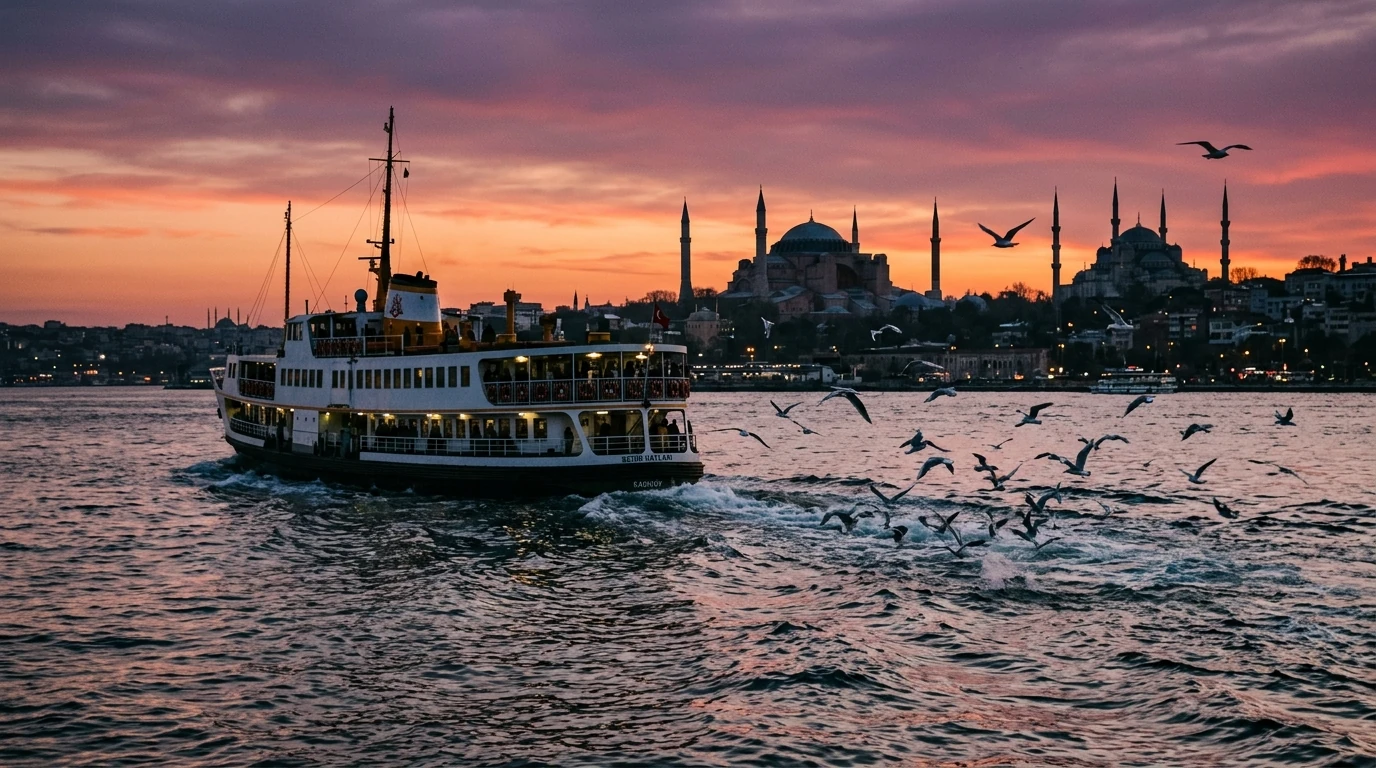
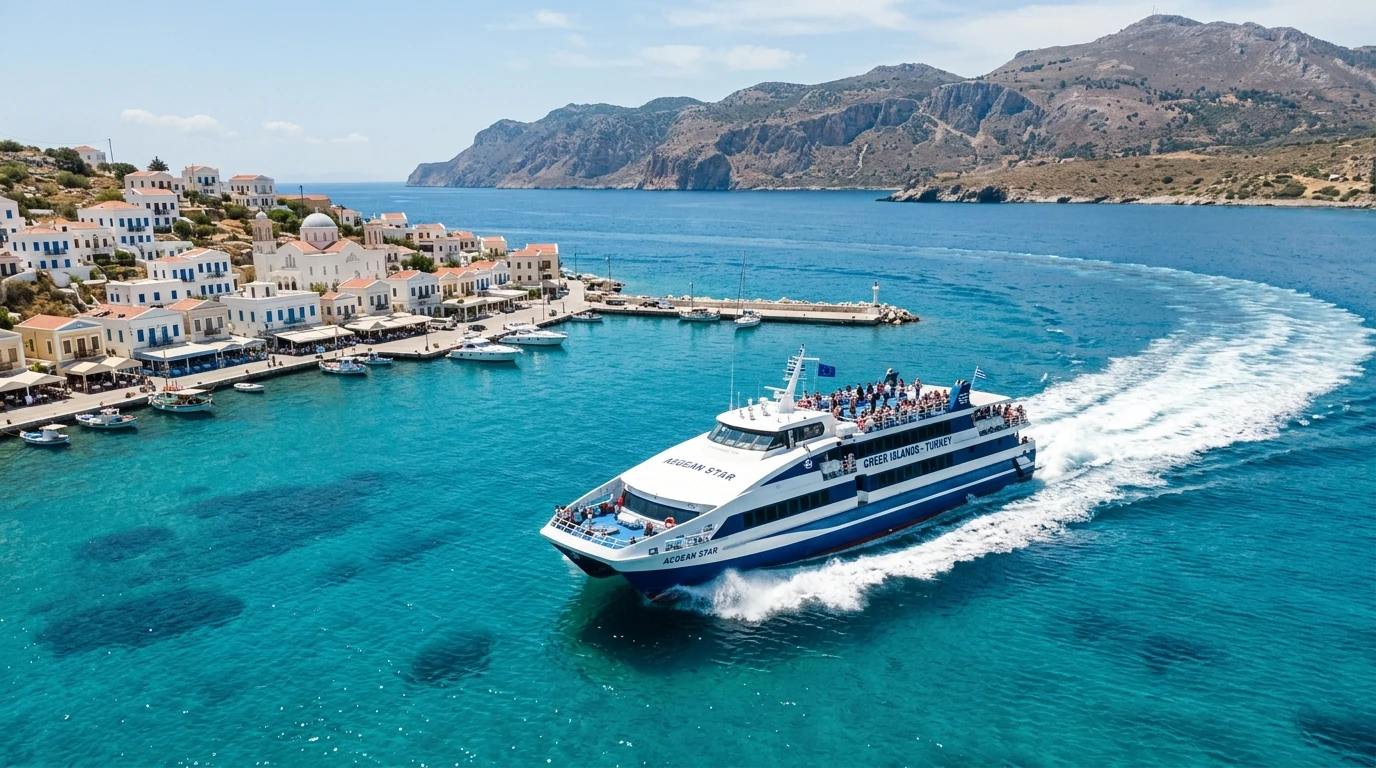
Ferries are the fastest, most scenic way to travel between Istanbul's coasts, nearby islands, and Greek island destinations across the Aegean.
Domestic Ferry Routes#
- Istanbul Princes' Islands: Regular ferries run from Kabatas port on Istanbul's European side, with stops at Kinaliada, Burgazada, Heybeliada, and Buyukada (the largest island). The maximum travel time to Buyukada is 55 minutes, and fares start at under EUR 1 with an Istanbulkart. Ferries depart every hour or so from Kabatas.
- Istanbul to Bursa: Fast ferries run from Eminonu port to Bursa's Mudanya ferry terminal in 1 hour 50 minutes, for approximately TL 530 / EUR 16.50. Competing operator IDO also runs ferries from Yenikapi to Bursa in 1 hour 30 minutes. This is far faster than taking a bus to Bursa for day trips.
- Operators: Sehir Hatlari (the city-run public ferry service), IDO, and BUDO. All accept the Istanbulkart for contactless payment, so you don't need to buy separate paper tickets.
International Ferries to Greek Islands#
Turkey's Aegean ports have regular fast ferry connections to popular Greek islands, perfect for day trips or multi-leg European itineraries.
- Key Turkish ports: Bodrum, Marmaris, Kusadasi, Cesme, Fethiye, Ayvalik
- Connected Greek islands: Chios, Kos, Lesvos, Rhodes, Samos, Symi
- 2026 popular routes:
| Route | Frequency | Travel Time | Fare (one-way / round-trip) |
|---|---|---|---|
| Chios-Cesme | Daily, high-speed | 20 min | EUR 25 / 30 |
| Kos-Bodrum | Daily, high-speed | 45 min | EUR 17 / 30 |
| Rhodes-Marmaris | Daily | 60 min | EUR 40 / 70 |
| Rhodes-Fethiye | Seasonal (April-Oct), high-speed | 90 min | EUR 40 / 75 |
| Samos-Kusadasi | Daily | 75 min | EUR 40 / 60 |
| Lesvos-Ayvalik | Daily (May-Oct) | 80 min | EUR 15 / 25 |
- Key tips:
- Services run most frequently between April and October, with very limited winter service. The Bodrum-Kos route is the most reliable for off-season travel.
- Book at least one day in advance, especially in peak July-August, to secure a spot. You may need to submit your passport overnight for registration.
- You must carry a valid passport for all international ferry trips, even day trips.
- A same-day round-trip ticket is often available for little more than a standard one-way fare, making Greek island day trips very affordable.
Budget and General Practical Tips#
- Daily budget ranges:
- Budget travelers: EUR 25-45 per day (staying in hostels, eating street food, using public transport)
- Mid-range travelers: EUR 55-90 per day (staying in 3-star hotels, eating at sit-down restaurants, booking premium transport classes)
- Istanbul public transport: Buy an Istanbulkart as soon as you arrive at Istanbul Airport or Sabiha Gokcen Airport. All metro, tram, bus, and ferry journeys cost under EUR 1 with the card.
- Inflation note: Prices in Turkey change frequently due to high inflation. The Turkish lira exchange rate fluctuates significantly (approximately EUR 1 = TL 54, USD 1 = TL 41 as of 2025). Always confirm fares before booking and carry enough Turkish lira cash for small purchases.
- Visa info: UK and EU citizens do not need a visa for stays up to 90 days in Turkey.
- Time zone: GMT+3 (no daylight saving time since 2016).
- General rules: All train stations have security checks (X-ray for bags, metal detectors for passengers), so arrive 10-15 minutes early for train departures. A VPN may be required to access some Turkish government and booking websites from abroad.
How to Combine Transport Modes for a Perfect Itinerary#
The best way to explore Turkey is to mix and match transport modes to save time and money:
- Use high-speed YHT trains for long journeys between major cities (Istanbul, Ankara, Konya, Kayseri) to avoid long bus rides.
- Use buses for off-rail destinations, like Cappadocia, Mediterranean beach towns, and remote eastern villages.
- Use ferries for coastal day trips, cross-island travel, and connections to Greek islands.
Sample 10-day itinerary:
- Days 1-3: Explore Istanbul using public transport and ferries to the Princes' Islands
- Day 4: Take the 4h40 YHT from Istanbul to Konya to visit the Rumi Museum
- Day 5: Take a 2-hour bus from Konya to Goreme, Cappadocia
- Day 6: Explore Cappadocia (hot air balloon ride, open-air museums)
- Day 7: Take a 1-hour shuttle to Kayseri, then the YHT to Ankara
- Days 8-9: Take the 24-hour Dogu Express sleeper train to Kars to visit the ancient ruins of Ani
- Day 10: Fly back to Istanbul from Kars, or continue by bus to the Black Sea coast
This combination of train, bus, and ferry lets you experience Turkey's incredible diversity while keeping travel costs low and comfort levels high.
Conclusion#
Turkey's public transport network is one of the most accessible, affordable, and scenic in the world, making it easy for travelers of all budgets to explore every corner of the country without renting a car. Key takeaways to remember:
- Book early for popular routes: The Dogu Express, peak-season YHT trains, and Greek island ferries sell out weeks in advance. Secure your spots as soon as booking opens (60 days for trains).
- Always carry your ID/passport: Required for train boarding, international ferries, and occasional bus checks.
- Use a VPN if booking from abroad: Some Turkish government and booking websites require a Turkish IP address.
- Respect local customs: The opposite-gender bus seating rule is standard practice. Keep valuables with you on all journeys.
- Take advantage of 2026's new YHT routes: The Kayseri and Bursa spurs open up faster connections to Cappadocia and the Marmara region.
- Combine transport modes: Mix trains, buses, and ferries for the most efficient and enjoyable Turkey travel experience.
References#
- Seat 61 - Train Travel in Turkey: www.seat61.com/train-travel-in-turkey.htm
- TCDD Tasimacilik Official Website: www.tcddtasimacilik.gov.tr
- TCDD E-Bilet Booking Portal: ebilet.tcddtasimacilik.gov.tr
- Turkey Travel Planner - Bus Travel: turkeytravelplanner.com/trans/Bus/index.html
- Turkey Travel Planner - Greek Island Ferries: turkeytravelplanner.com/trans/ship/greekislandferries.html
- National Geographic - Best Train Journeys in Turkey: www.nationalgeographic.com/travel/article/best-train-journeys-in-turkey
- Istanbul Sehir Hatlari Ferry Service: sehirhatlari.istanbul
- Eurail - Turkey Trains: www.eurail.com/en/plan-your-trip/trip-ideas/top-destinations/turkey-train
- Obilet Bus and Train Comparison: www.obilet.com
- Wanderu International Booking: www.wanderu.com