Perched 1,200 meters up a near-vertical cliff in Turkey's misty Pontic Mountains, Sumela Monastery looks like something out of a fairy tale. For over 1,600 years, this former Greek Orthodox sacred site has clung to the rock face overlooking the lush Altındere Valley, surviving empires, fires, earthquakes, and centuries of cultural change. Today, it is one of the Black Sea region's most beloved tourist attractions, a site of deep historical and religious significance, and a longstanding candidate for UNESCO World Heritage status. Whether you're a history buff, a nature lover, or a traveler chasing one-of-a-kind views, Sumela is well worth adding to your Turkish itinerary. This comprehensive 2026 guide covers everything you need to know to plan a perfect visit.
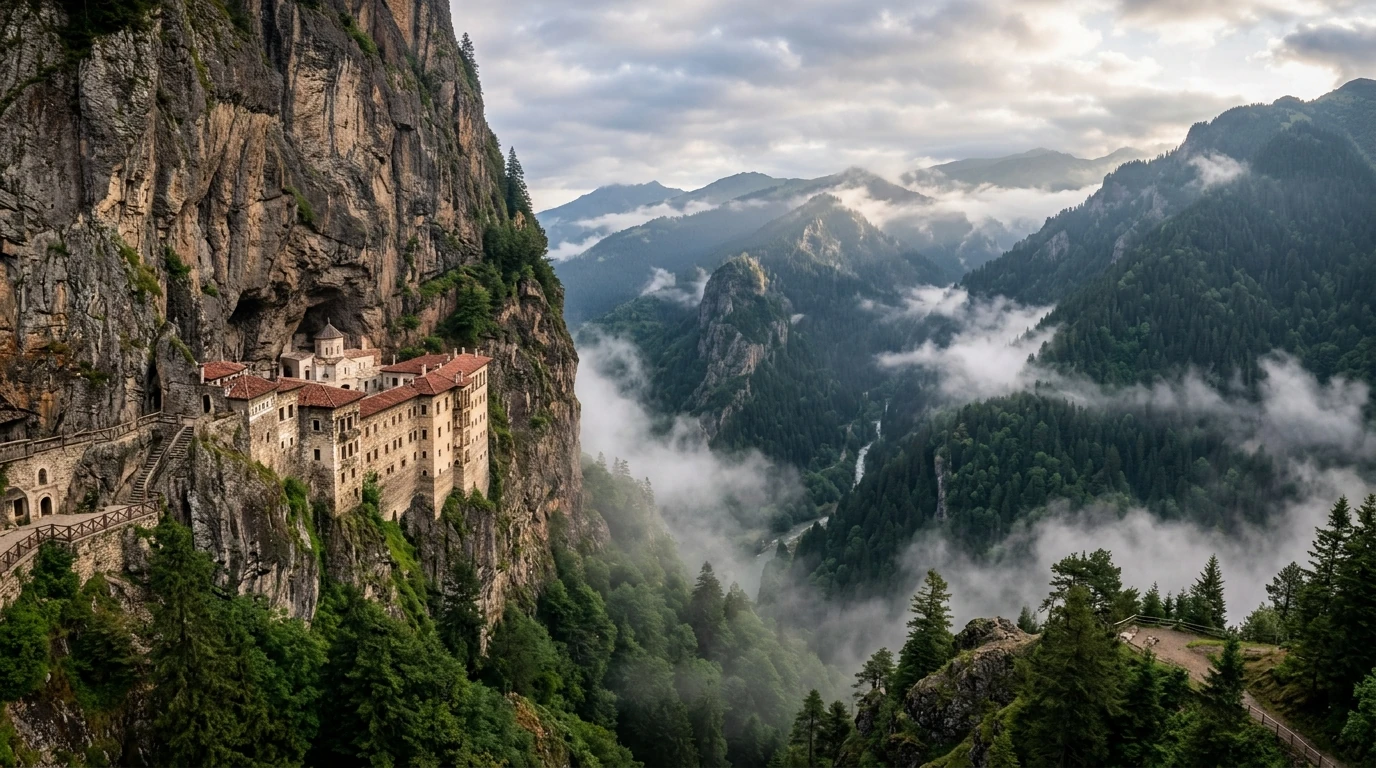
Table of Contents#
- What Is Sumela Monastery, And Why Does It Matter?
- The 1,600-Year History of Sumela: From Monks to Museum
- Architecture and Art: Hidden Chapels, Sacred Frescoes, and Cliffside Engineering
- 2026 Visitor Guide: Tickets, Hours, Getting There, and Pro Tips
- Nearby Attractions to Pair With Your Sumela Trip
- Common Myths and Misconceptions Debunked
- Final Thoughts: Is Sumela Worth Visiting?
- References
What Is Sumela Monastery, And Why Does It Matter?#
Sumela Monastery (also called Sümela Manastırı in Turkish) is a state-run museum and former Greek Orthodox monastery dedicated to the Virgin Mary. It is located in the Maçka district of Trabzon province, inside Altındere National Park.
Key fast facts:
- It is one of the oldest surviving Christian monasteries in the world, dating back to the 4th century CE
- It has been on the UNESCO Tentative List for World Heritage designation since 2000
- It draws over 500,000 visitors annually, making it the most popular historic site on Turkey's Black Sea coast
Unlike most ancient monasteries, Sumela was built directly into a natural cave in the cliff face, making it a marvel of both early engineering and natural beauty.
The 1,600-Year History of Sumela: From Monks to Museum#
Sumela's history is as dramatic as its location. Over the centuries, it has been built, destroyed, rebuilt, abandoned, and restored — each chapter adding to the mystique that draws hundreds of thousands of visitors every year.
The Founding Legend and Early History#
According to local tradition, the monastery was founded around 386 CE during the reign of Roman Emperor Theodosius I by two Athenian monks, Barnabas and Sophronios. The pair claimed they had a vision of the Virgin Mary directing them to the Pontic Alps, where they found a cave holding a miraculous icon of Mary, known as Panagia Gorgoepekoos (She Who is Quick to Hear). Legend says this icon was painted by the Apostle Luke himself, making it one of the most venerated relics in the Orthodox Christian world.
In the 6th century, Byzantine general Belisarius ordered the monastery restored and expanded at the request of Emperor Justinian, turning it from a small hermit cave into a formal religious complex.
Golden Age Under the Empire of Trebizond#
Sumela reached its current size and layout in the 13th century, during the rule of the Empire of Trebizond, a successor state to the Byzantine Empire. Emperor Alexios III of Trebizond granted the monastery massive endowments after he claimed the Virgin Mary saved him from a storm during a sea voyage. A 1365 royal decree (chrysobull) formally confirmed the monastery's full autonomy, freedom from taxes, and protected status, listing 40 serfs by name who were exempt from all taxes except one biannual levy.
Ottoman Era#
When Ottoman Sultan Mehmed II conquered Trebizond in 1461, he did not destroy the monastery. Instead, he granted it formal sultanic protection and privileges, and later Ottoman rulers also made donations to the site, recognizing its sacred status for local Christian communities. In 1682, Sumela became home to the Phrontisterion of Trapezous, one of the most prestigious Greek educational institutions in the Black Sea region.
Abandonment and Modern History#
The monastery was active until 1923, when it was abandoned following the Treaty of Lausanne population exchange between Greece and Turkey. Before leaving, monks buried treasures in hidden locations around the site and transported the Panagia Gorgoepekoos icon to the newly built Nea Sumela Monastery in northern Greece, where it remains today.
Key events since then:
- 1930: A fire destroyed most of the monastery's wooden structures, and treasure hunters caused extensive damage to remaining parts of the site in the following decades.
- 1970s: Turkey's Ministry of Culture and Tourism launched the first attempts to preserve and renovate Sumela as a national treasure.
- 2015: The site was closed to visitors due to dangerous rock falls.
- 2019: Reopened on May 18 after extensive restoration work.
- 2010: On August 15, the first Orthodox divine liturgy in 88 years was held at Sumela, and a service is now held annually on the Feast of the Assumption, drawing thousands of pilgrims from around the world.
Architecture and Art: Hidden Chapels, Sacred Frescoes, and Cliffside Engineering#
Sumela's complex is spread across multiple levels carved into and built against the cliff. The site is a testament to centuries of architectural ingenuity in one of the most challenging terrains imaginable.
Core Structural Elements#
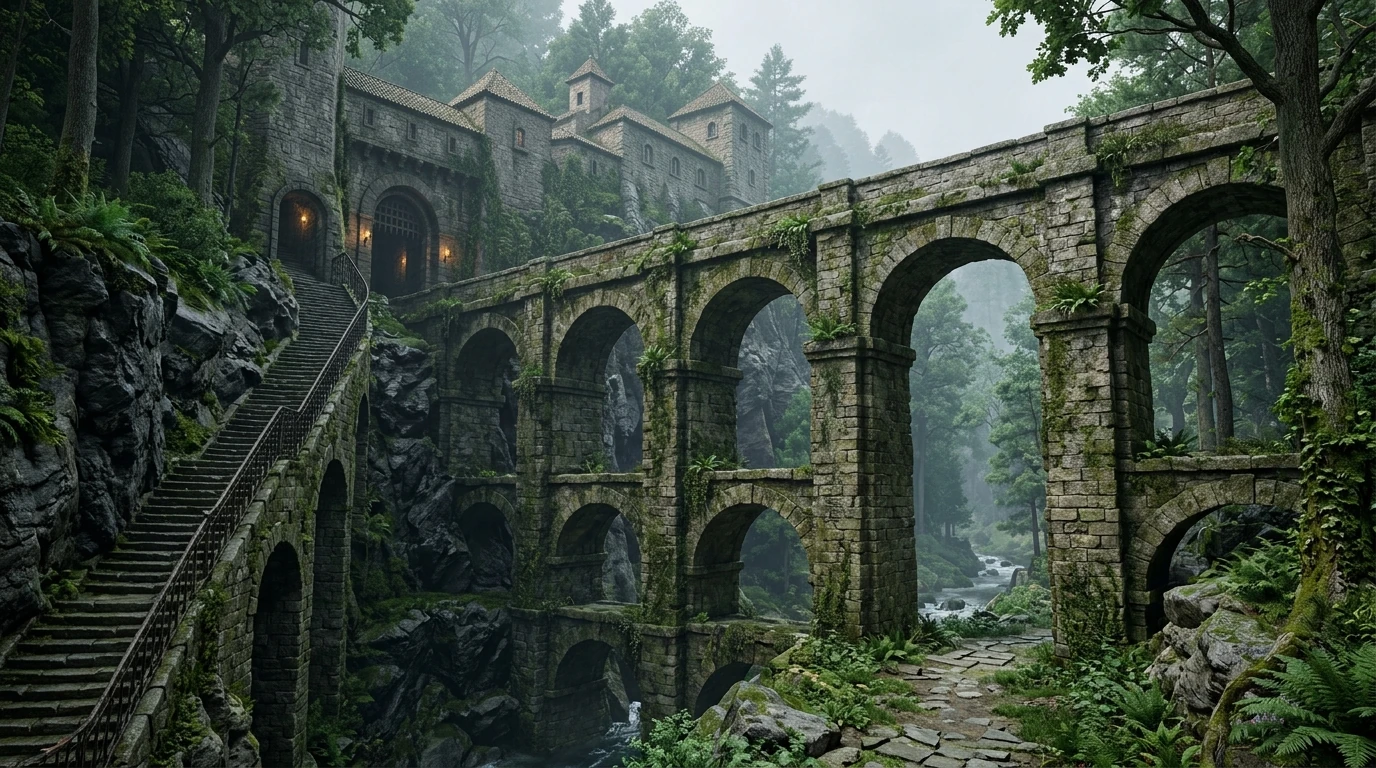
- The Aqueduct: A large stone aqueduct at the entrance, built against the cliff to supply water to the monastery, with many of its original arches restored.
- The Entrance Stairway: A long, narrow stone stairway leading to the main entrance, with a historic guard room just inside the gate.
- The Rock Church: A natural cave converted into the central sacred space of the monastery, featuring some of the most important frescoes on the site.
- Supporting Buildings: Chapels, kitchens, student dormitories, a guesthouse, a library, a sacred spring, and a bell tower.
- The 1840 Guest Wing: A large building with a wide balcony, used for monk cells and guest accommodation, dating from 1840.
The Frescoes#
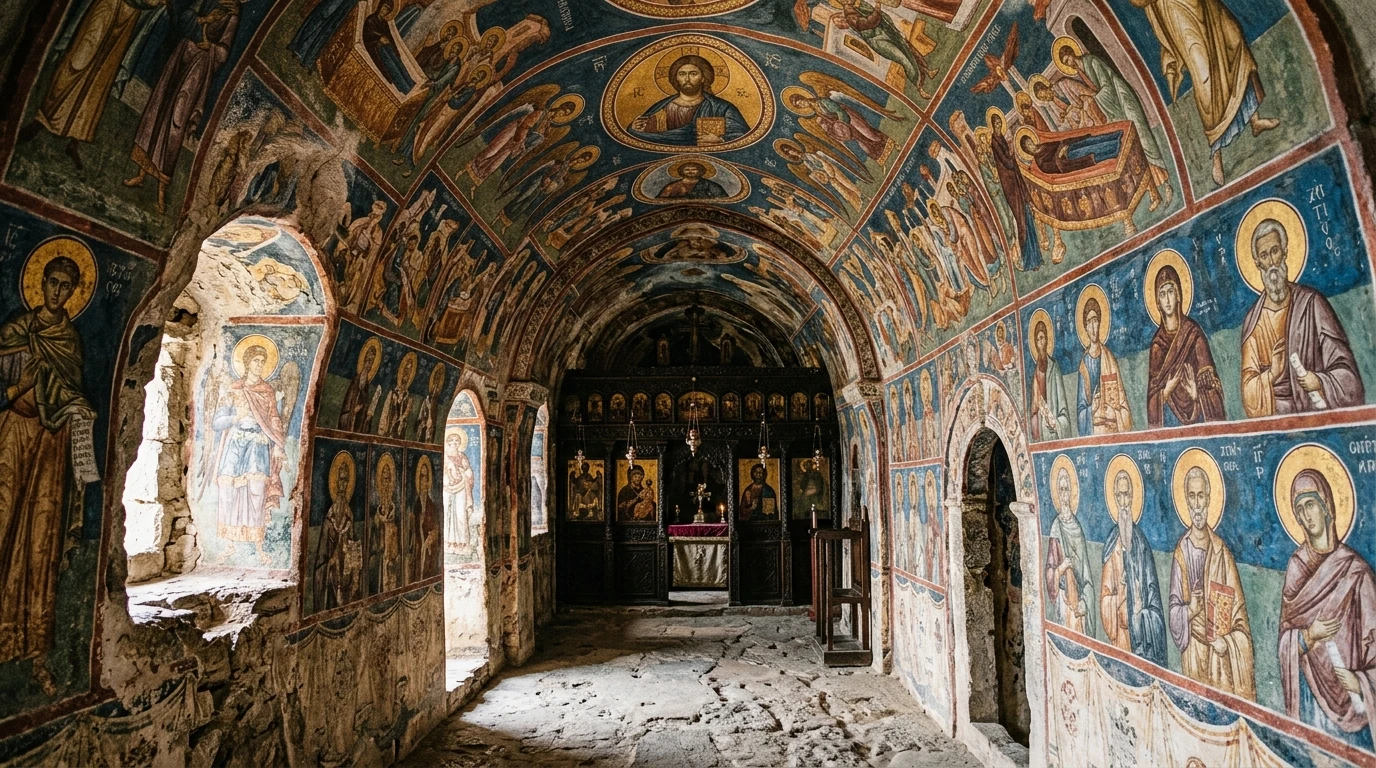
The inner and outer walls of the rock church are covered in frescoes dating back to the reign of Alexios III of Trebizond in the 13th century. The adjacent chapel has frescoes painted in three layers from the early 18th century. All depict scenes from the Bible, including the life of Jesus Christ, the Virgin Mary, angels, apostles, and local saints.
During the 2015–2017 restoration, workers discovered a secret tunnel leading to a previously unknown hidden chapel, whose walls are covered in rare frescoes depicting heaven and hell, and scenes of life and death. This was one of the most significant archaeological finds at the site in decades.
Ongoing Restoration#
Restoration teams have worked for years to repair damage to the frescoes from vandalism, weather, and neglect:
"For decades after the monastery was abandoned, it was unprotected, and vandalism and weather caused extensive damage," says restorer Senol Aktaş. "Our restoration work uses traditional techniques to match the style of the original artists, so repairs are almost invisible."
A common myth claims the frescoes were defaced for religious reasons, but local guide Öznur Doksöz explains: "Most of the scratches, especially on the eyes of saints, are from local people who believed paint chips from the frescoes could be mixed with water to make blessed healing water, not religious vandalism."
To prevent future rock falls, Trabzon province museum manager Levent Alniak says industrial mountain climbers were hired to install steel mesh, cables, and stakes across the entire cliff face above the monastery — a dramatic engineering feat in itself.
2026 Visitor Guide: Tickets, Hours, Getting There, and Pro Tips#
Getting to Sumela Monastery#
Sumela is located approximately 45 km south of Trabzon city center, within the borders of Maçka district. Here are the most common ways to get there:
Option 1: By Car (Most Flexible)#
The drive from Trabzon to Maçka takes about 40–50 minutes via the D010 and D885 highways, followed by 20–30 minutes further up the mountain to the Altındere National Park parking lot. Roads are well-maintained. Free parking is available on site.
Option 2: By Public Dolmuş (Most Economical)#
Take a dolmuş (shared minibus) from Trabzon Otogar (bus station) to Maçka. These run frequently and cost around 20–30 TL. From Maçka, take a local taxi or shared shuttle to the national park entrance. During peak summer season, some direct dolmuş services run from Trabzon city center all the way to the Sumela parking area — inquire locally.
Option 3: Organized Tour (Most Convenient)#
Most Trabzon hotels and travel agencies offer half-day or full-day Sumela tours starting at approximately $30–60 USD per person, often including transport, entrance fees, and a guide. Many tours combine Sumela with Hamsiköy or Karaca Cave.
Comparison of Travel Options#
| Travel Option | Pros | Cons | Estimated Cost (USD) | Flexibility |
|---|---|---|---|---|
| Rental Car | Maximum flexibility, self-paced | Requires navigation, parking fees | $30–60/day + fuel | High |
| Private Taxi | Convenient, direct, driver waits | Most expensive option | $80–120 round trip | Medium-High |
| Organized Tour | Logistics handled, budget-friendly | Fixed itinerary, less personalized | $30–60/person | Low |
| Dolmuş + Shuttle | Most economical, authentic experience | Requires transfers, potential wait times | $2–5/person | Medium |
The Final Walk#
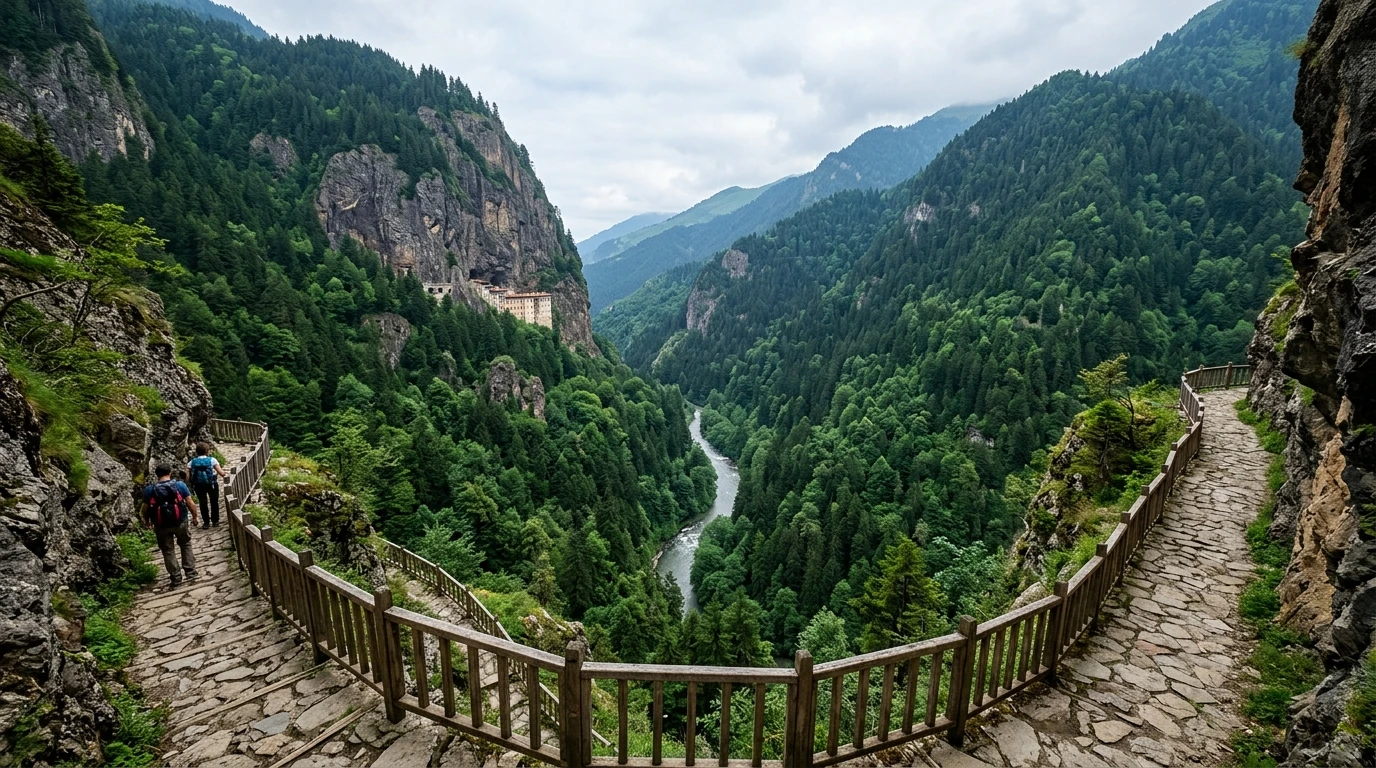
From the national park parking lot, a public shuttle runs to the trailhead near the monastery entrance for 20–30 TL per person round trip. The final walk to the monastery is 300–500 meters uphill on stone steps through dense forest, taking 15–25 minutes depending on your pace. This walk builds anticipation — you'll catch glimpses of the monastery through the trees before the dramatic full reveal.
Opening Hours and Fees (2026)#
| Period | Opening Hours |
|---|---|
| Summer Season (April 1 – October 31) | 09:00 – 19:00 |
| Winter Season (November 1 – March 31) | 09:00 – 16:00 |
Entrance Fees:
- Foreign visitor entrance fee: Approximately 200–250 TL (~$6–8 USD)
- Additional Altındere Valley National Park entry fee: 10–20 TL
- Free entry for holders of the Turkish Museum Pass
- Children under 8 are often free
- Tickets are purchased on-site. Cash (TL) is always accepted, and credit/debit cards are increasingly common.
Pro Tips for Visiting Sumela Monastery#
- Dress appropriately: Shoulders and knees should be covered out of respect for the site's historical and religious significance. Bring a scarf or light wrap if needed.
- Wear sturdy shoes: The stone steps are often slippery, especially after rain. Comfortable walking shoes with good grip are essential — avoid flip flops or thin-soled shoes.
- Allow enough time: Plan for 2–3 hours to explore the entire monastery, plus travel time to and from Trabzon.
- Best time to visit: Spring (April–June) and autumn (September–October) offer mild weather (15–25°C), fewer crowds, and the most beautiful mountain scenery. Early morning visits provide the best light for photography and the fewest tourists.
- Photography rules: Photography is allowed across the site, but flash is prohibited inside the rock church to protect the delicate frescoes.
- Accessibility note: The steep stone steps make the site inaccessible for visitors with severe mobility issues, and strollers are not practical due to the terrain.
- Pack essentials: Bring a reusable water bottle, sun protection, and layers. Mountain weather can change quickly, even in summer.
- Bring local currency: While cards are increasingly accepted, having some Turkish Lira in cash ensures you can pay for the shuttle, snacks, and entrance fees without issues.
Common Mistakes to Avoid#
- Visiting in winter without checking conditions: Heavy snow and ice often make mountain roads impassable between December and February. Always confirm road conditions with local authorities before attempting a winter visit.
- Arriving at midday in summer: The monastery is most crowded between 11:00 and 15:00 during July and August. Early morning or late afternoon visits are far more pleasant.
- Not bringing water: There are limited refreshment options inside the monastery complex. Carry your own water, especially in warmer months.
- Underestimating the walk: The final ascent involves steep stone steps and a gradual uphill climb. Visitors with heart or joint conditions should take it slowly.
Nearby Attractions to Pair With Your Sumela Trip#
Most visitors combine a trip to Sumela with other popular Black Sea region sites:
- Uzungöl Lake: A glacial lake surrounded by pine forests and traditional wooden houses, about 40 minutes from Sumela. Stop here for coffee or lunch with stunning lake views.
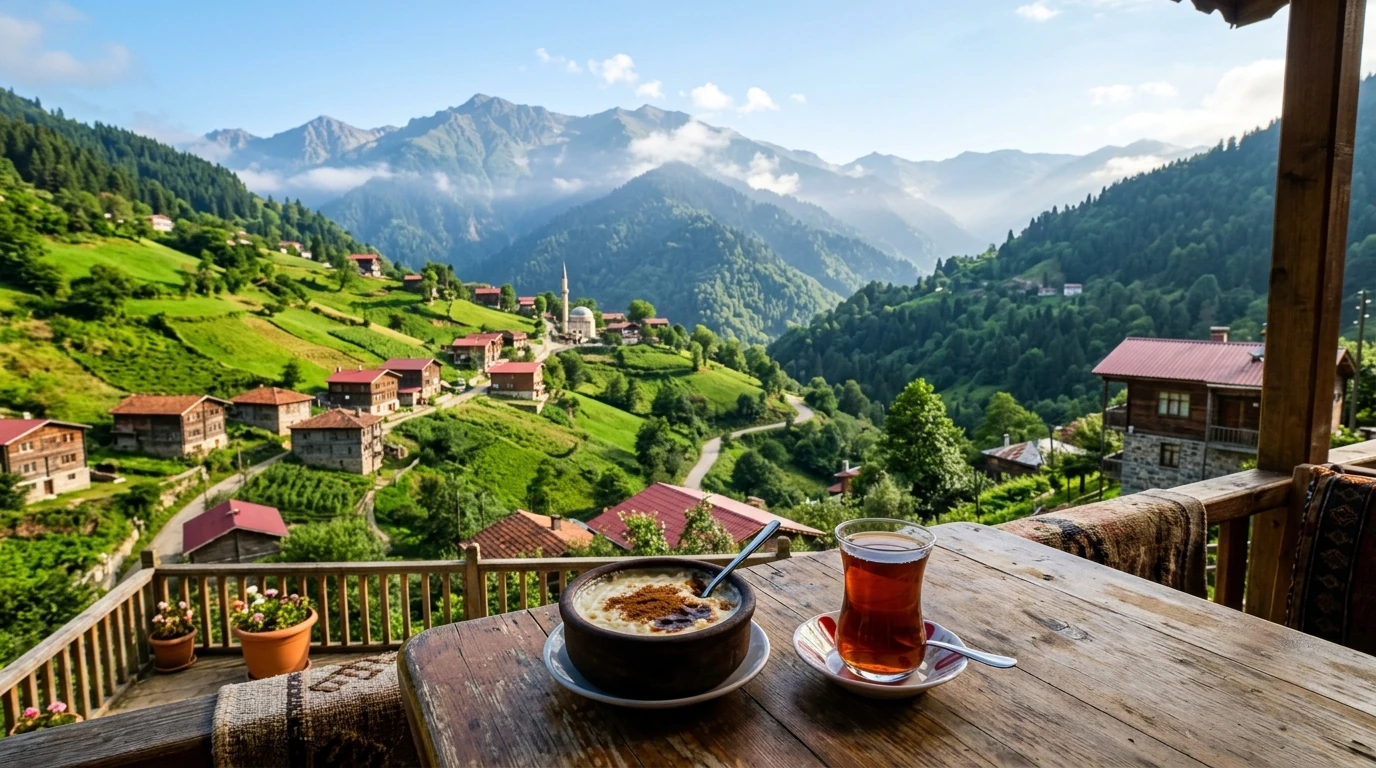
- Hamsiköy Village: Famous across Turkey for its creamy rice pudding (sütlaç), just 20 minutes from Sumela. Don't leave without trying a bowl at one of the village's roadside restaurants.
- Karaca Cave: One of the largest and most beautiful show caves in Turkey, with colorful stalactites and stalagmites, about 1 hour from Sumela near Gümüşhane.
- Trabzon City: Visit the historic Hagia Sophia Mosque of Trabzon (a former Byzantine church), the Atatürk Pavilion, and the city's bustling waterfront markets. Trabzon is about 13 hours by car from Istanbul but less than 2 hours by air.
Common Myths and Misconceptions Debunked#
Myth 1: Sumela is an active religious monastery. Fact: It is a state-run museum. The only religious service held there is the annual Orthodox liturgy on August 15, the Feast of the Assumption of the Virgin Mary.
Myth 2: Sumela is a UNESCO World Heritage Site. Fact: It has been on the UNESCO Tentative List since 2000, but has not yet received full World Heritage designation.
Myth 3: Winter visits are straightforward. Fact: Heavy snow and ice often make the mountain roads impassable between December and February. Winter visits are not recommended unless you confirm road conditions with local authorities in advance.
Myth 4: Frescoes were deliberately defaced for religious reasons. Fact: Most damage comes from people scratching paint chips for supposed healing water, treasure hunter activity, and the 1930 fire — not organized religious vandalism.
Final Thoughts: Is Sumela Worth Visiting?#
Sumela is far more than just a historic site. It is a perfect blend of dramatic natural beauty, 1,600 years of cross-cultural history, and awe-inspiring ancient engineering. For anyone traveling to Turkey's Black Sea coast, it is an unmissable stop.
Just plan ahead, wear comfortable shoes, and take a moment to pause and appreciate the fact that you are standing in a sacred space that has survived empires — built by monks who chose one of the most dramatic locations on earth to worship. Whether you come for the history, the art, the nature, or simply the Instagram-worthy views, Sumela Monastery delivers an experience you won't forget.
References#
- Wikipedia contributors. "Sumela Monastery." Wikipedia, The Free Encyclopedia. https://en.wikipedia.org/wiki/Sumela_Monastery
- Republic of Türkiye Ministry of Culture and Tourism. "Sümela Monastery." https://www.sumela.gov.tr
- UNESCO World Heritage Centre. "Sümela Monastery (The Monastery of Virgin Mary)." Tentative List. https://whc.unesco.org/en/tentativelists/1397/
- Yogerst, Joe. "The ancient monastery hanging from the side of a cliff." CNN Travel, October 16, 2025. https://www.cnn.com/travel/sumela-monastery-trabzon-turkey
- My Turkey Adventure. "Sumela Monastery Visit Guide 2026: How to Get There, Tickets, Best Time." June 3, 2026. https://myturkeyadventure.com/blog/sumela-monastery-visit-guide-2026
- Republic of Türkiye Ministry of Culture and Tourism. "Sümela Monastry: Religious Monuments." https://www.ktb.gov.tr/EN-113781/sumela-monastry.html