Imagine stepping off a bus in southeastern Turkey, and immediately being hit with three competing scents: charred lamb drifting from kebab grills, melted butter and sweet pistachios wafting from baklava bakeries, and tangy sumac and fermented pickles from street food stalls. That's Gaziantep (locally called Antep), Turkey's official food capital and a 2015 UNESCO Creative City of Gastronomy, where every bite has 5,000 years of history behind it. Even after the devastating 2023 Turkey-Syria earthquakes, the city's culinary community has rallied to rebuild its iconic bakeries, kebab shops, and breakfast spots, making a food-focused trip here not just a delicious adventure, but a way to directly support local livelihoods. In this guide, we're breaking down everything you need to eat, where to find it, and how to savor Antep like a local.
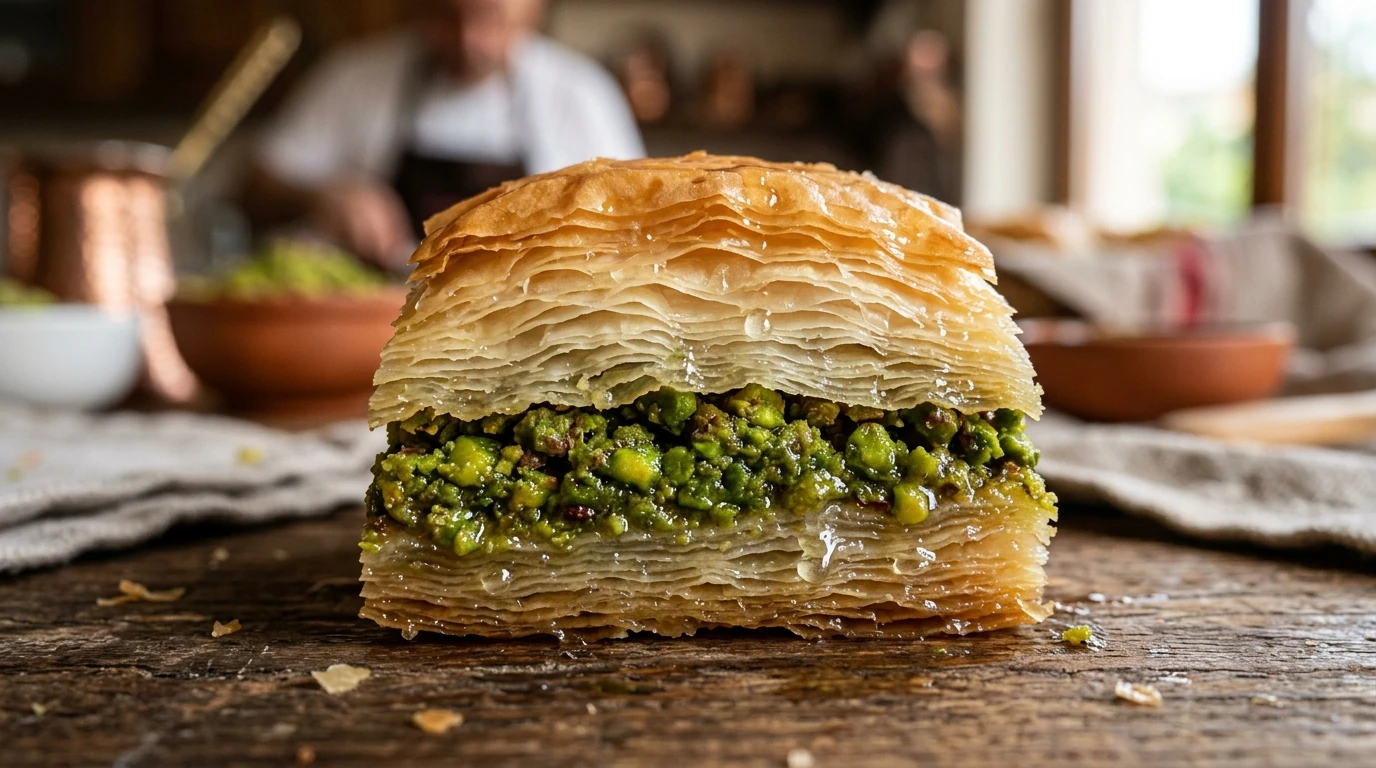
Table of Contents#
- Why Gaziantep Is Turkey's Unrivaled Food Capital
- The Star of Antep: Authentic Gaziantep Baklava (Where to Eat + Types to Try)
- Gaziantep Kebabs: Don't Skip These 5 Iconic Picks
- Gaziantep Breakfast: Worth Waking Up 2 Hours Early For
- Under-the-Radar Dishes & Drinks to Add to Your List
- Pro Tips for Your Gaziantep Food Trip
- Final Thoughts
- References
Why Gaziantep Is Turkey's Unrivaled Food Capital#
Nestled near the Syrian border, Gaziantep's cuisine is a vibrant melting pot of Anatolian Turkish and Arab Middle Eastern culinary traditions, resulting in bolder, spicier, more layered flavors than you'll find in western Turkey. The city boasts over 500 unique local dishes, including 30+ kebab varieties, 40 eggplant preparations, 30 yogurt dishes, 20 lahmacun types, and 30+ desserts.
Two local ingredients define Antep's food identity:
- Nizip olive oil: Grown in the nearby Nizip district, this olive oil has a higher fat content than olives grown elsewhere in Turkey, adding a rich, fruity depth to every dish.
- Antep pistachios (Antepfıstığı): The city's official symbol, 70% of Turkey's entire pistachio crop comes from this region. Archaeologists have found pistachio remains dating to the 3rd millennium BCE near Gaziantep, and the rocky local soil and blistering summer heat produce nuts that are brighter green and sweeter than pistachios grown anywhere else in the world.
Common spices used across Antep's cuisine include cumin, sumac, fennel, mint, saffron, and cinnamon.
The Star of Antep: Authentic Gaziantep Baklava (Where to Eat + Types to Try)#
Gaziantep baklava is so iconic it holds EU Protected Designation of Origin status, a spot on the UNESCO Intangible Cultural Heritage list, and the European Commission officially recognizes Gaziantep as the birthplace of baklava.
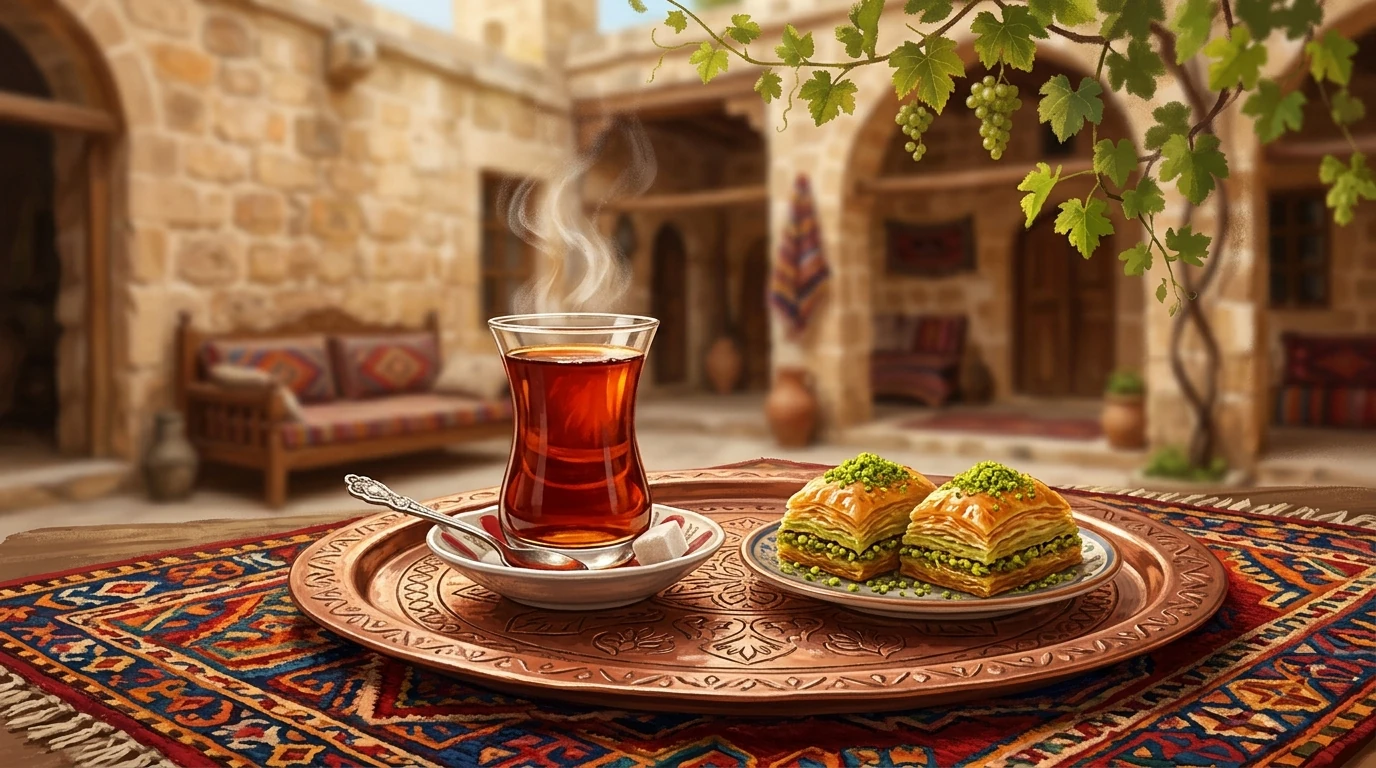
The classic recipe is deceptively simple: layers of paper-thin phyllo pastry brushed with melted butter, stacked with chopped early-August harvested Antep pistachios, baked until golden, then drowned in hot sugar syrup brightened with a squeeze of lemon to cut sweetness. Perfecting the craft takes time: it takes a minimum of 5 years of training to become a master baklava maker in Antep, and the dessert is served at every major life milestone, from births and weddings to funerals and religious holidays.
Best Baklava Spots in Gaziantep#
- Koçak Baklava: Widely regarded as the best baklava in the city, their version is perfectly balanced—sweet but not cloying, with a subtle buttery aftertaste and piles of bright green pistachios.
- Güllüoğlu (Elmacı Bazaar): Founded in 1871, this is Turkey's oldest continuously operating baklava bakery. Founder Güllü Çelebi got the idea for pistachio baklava after trying walnut baklava in Damascus and Aleppo, then swapped walnuts for local Antep pistachios to create the recipe we know today.
- Tahmis Kahvesi: Operating since 1635, their baklava uses 40 hand-rolled phyllo layers and is baked in wood-fired stone ovens for a deep, smoky sweetness.
- İmam Çağdaş: Founded in 1887, this spot is famous for both its kebabs and baklava, making it the perfect place for a one-stop sweet and savory meal.
Types of Baklava to Order#
| Variety | Description |
|---|---|
| Fıstıklı Baklava | Classic square cut, layered with pistachios, ideal for first-timers |
| Şöbiyet | Loaded with extra pistachios for nut lovers |
| Bülbül Yuvası | Round, stuffed "nightingale's nest" shaped baklava |
| Midye Baklava | Small, mussel-shaped single-serve bites |
| Havuç Dilimi | Flat "carrot slice" shaped baklava with extra crunchy phyllo layers |
| Burma Kadayıf | Twisted shredded phyllo stuffed with pistachios, chewier than traditional baklava |
Gaziantep Kebabs: Don't Skip These 5 Iconic Picks#
With over 30 unique kebab varieties, you could spend a week in Antep and try a new one every meal. These are the non-negotiable picks:
Küşleme#
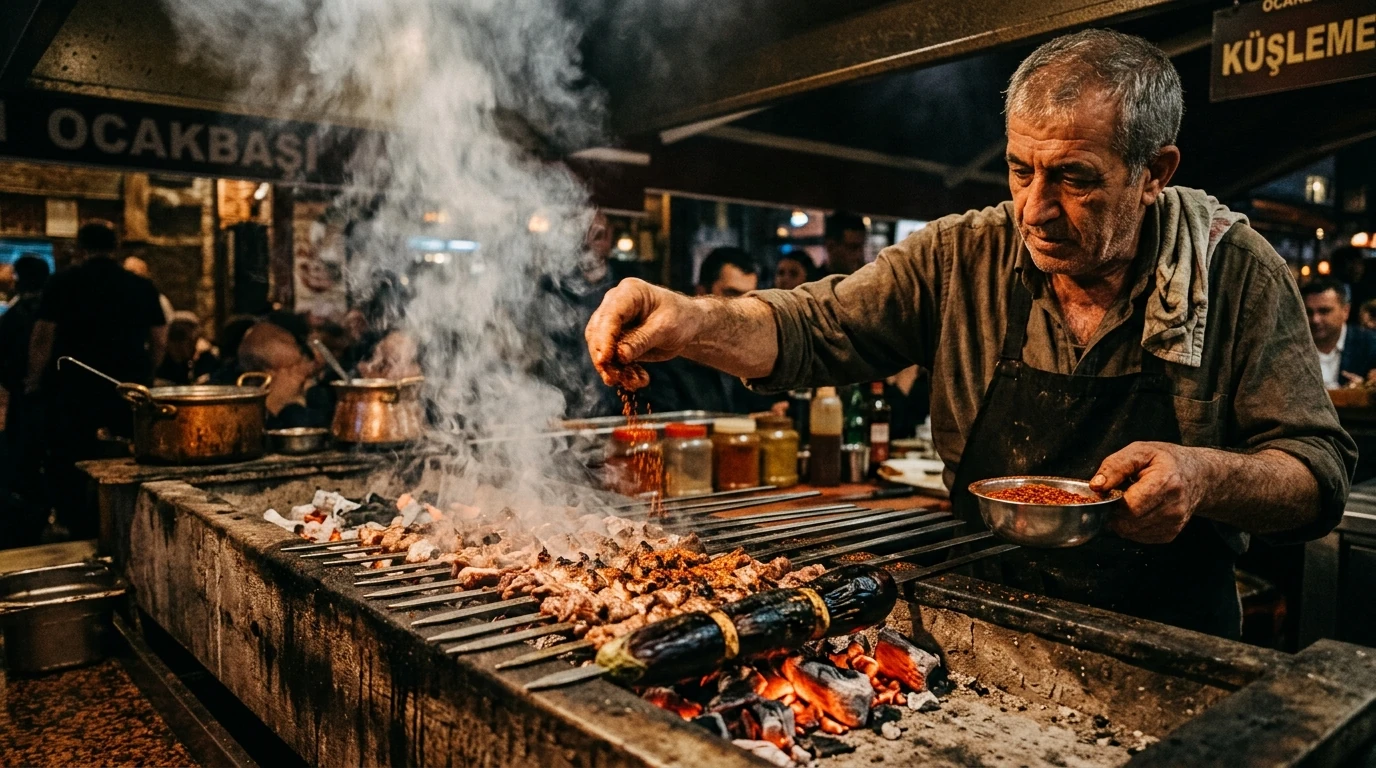
The most luxurious kebab in Antep: made from pure lamb tenderloin, no fat, no marinade, grilled over hot charcoal until juicy and charred at the edges.
- Best spot: Küşlemeci Halil Usta, located near the Zeugma Mosaic Museum, open only 11:00-15:30 so get there early.
- Pro tip: Order the mixed plate, which comes with spiced (baharatlı) and plain (sade) küşleme plus simit kebab.
Ali Nazik Kebab#
A creamy, smoky crowd favorite: chargrilled eggplants are pureed with garlic yogurt, then topped with sauteed lamb pieces and a drizzle of melted butter. It's rich, garlicky, and the perfect balance of savory and smoky.
- Best spot: İmam Çağdaş, the iconic 139-year-old spot that does both kebabs and baklava perfectly.
Patlıcanlı (Eggplant) Kebab#
Lamb meatballs are skewered alternating with thick slices of local eggplant, then grilled over open fire until the eggplant is soft and caramelized and the meat is crispy.
- Best spot: Köşk Kebap, a family-run spot popular with locals for weekend lunches.
Adana Kebap#
Antep's take on the regional classic: lamb and tail fat minced with a sharp zırh knife, seasoned with garlic, paprika, and red pepper flakes, then grilled over charcoal. It's spicy, juicy, and incredibly flavorful.
- Best spot: Kebapçı Yalçın, a no-frills casual spot with no printed menu, always packed with locals. The owner is famous for handing out free pieces of baklava to kids (and sometimes adults!) by hand.
Chicken Şiş Kebap#
Simple but perfectly executed: spiced chicken cubes grilled until crispy on the outside and juicy on the inside.
- Best spot: Kasap Yaşar Usta, a butcher shop that grills fresh chicken to order every day.
Pro tip: Visit with a group of 3-4 people so you can order multiple kebabs to share, instead of filling up on just one.
Gaziantep Breakfast: Worth Waking Up 2 Hours Early For#
Turkish breakfast (kahvaltı, meaning "before coffee") is famous around the world, but Antep's version is far bolder and more intense than the standard Istanbul spread, with flavors that lean into the city's Middle Eastern influences. Breakfast runs from 9:00 to 12:00 across the city, and it's meant to be a slow, leisurely meal, not a quick bite on the go.
Beyran Çorbası#
Antep's iconic breakfast soup is not for the faint of heart, but it's so good even former vegans swear by it. Lamb and marrow bones are boiled for up to 12 hours, then the meat is shredded and added back to the fatty broth with rice, garlic, and pepper paste. It's served spicy, with lemon wedges to squeeze on top and chewy flatbread for dipping.
- Best spot: Metanet Lokantası, widely regarded as serving the best beyran in the entire city.
Katmer#
Antep's sweet breakfast champion: a thin, flaky pancake-like envelope stuffed with ground Antep pistachios, buffalo milk kaymak (clotted cream), and sugar. The dough is spun, flipped, and stretched until it's paper thin, then folded into an envelope and grilled until crispy. Traditionally, it's served to newlyweds on their first morning together to symbolize a sweet life ahead.
- Best spots:
- Metanet Katmer, located near Gaziantep Castle, with outdoor seating under shade trees. Pair it with traditional Turkish lemonade, not tea—locals swear this is the only correct way to eat it.
- Katmerci Zekeriya Usta, a century-old family-owned bakery run by the third generation of the same family.
Full Traditional Breakfast Spread#
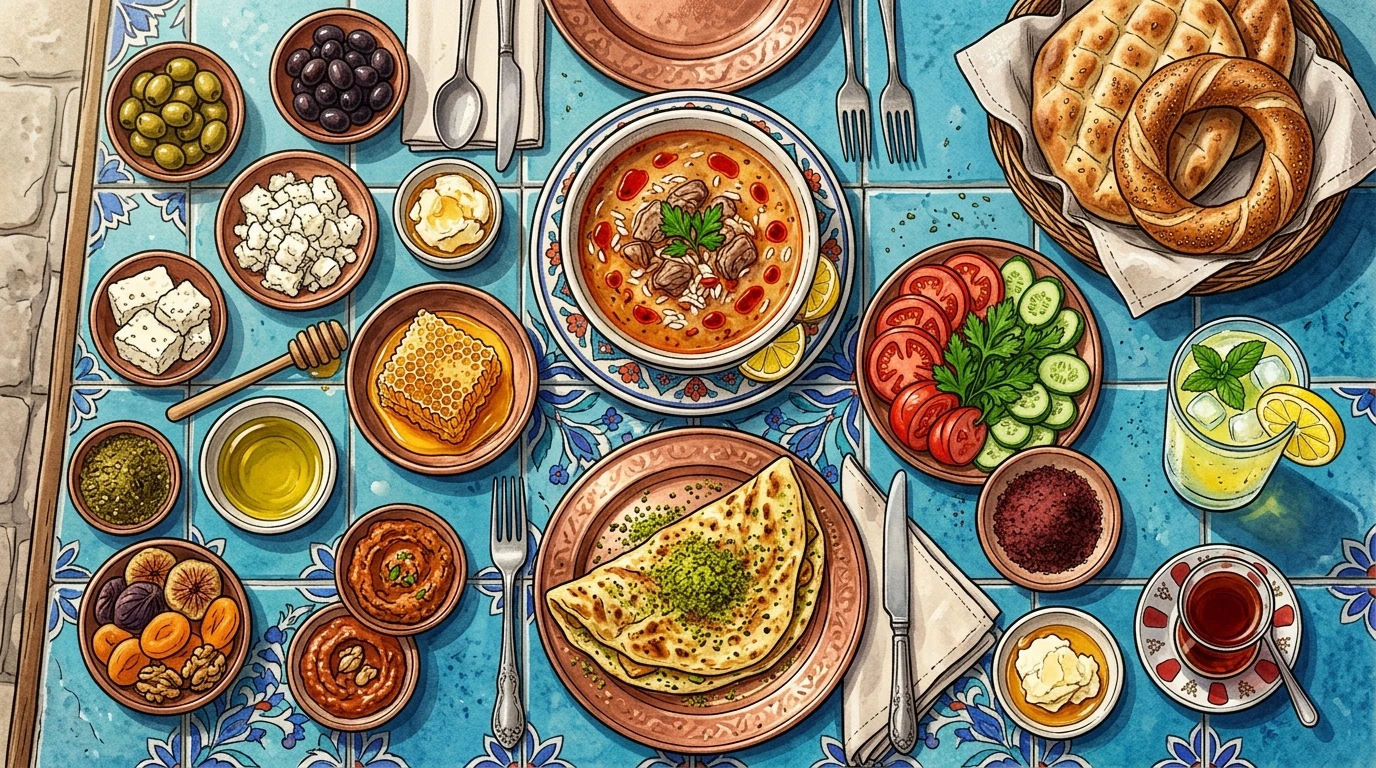
If you're really hungry, opt for a full Antep breakfast spread, which comes with 10+ small plates including: homemade jam, wild honey, Nizip olive oil, sumac, carrot preserve, pickled vegetables, local olives, buffalo kaymak, regional cheeses, fresh tomatoes and cucumbers, and fried eggs.
Under-the-Radar Dishes & Drinks to Add to Your List#
If you've tried all the iconic picks, don't miss these lesser-known gems:
- Lahmacun: Thin, crispy flatbread topped with minced lamb or beef and herbs, like cheese-free pizza. Antep has 20 unique varieties of lahmacun, so try as many as you can.
- Çiğ Köfte: A vegetarian "kebab" made from bulgur kneaded with tomato and pepper paste and herbs, served cold wrapped in lettuce or flatbread.
- Antep Dolma: Dried vegetables (like eggplant, peppers, and zucchini) stuffed with rice, garlic, onions, tomato paste, mint, and chili paste.
- Meyan Kökü Şerbeti: A refreshing liquorice sherbet drink, popular in summer and during Ramadan, sold by street vendors in traditional attire carrying golden samovars.
- Dibek Kahvesi: An Ottoman-era coffee ground using a mallet and stone mortar, served in a unique split cup with lighter roast on one side and darker roast on the other. Best at Sedar Bey.
- Fresh summer fruit: Local figs and cherries grown in the region are some of the sweetest you'll ever taste.
Pro Tips for Your Gaziantep Food Trip#
These tips will help you avoid common mistakes and savor Antep like a local:
- Meal times matter: Lunch is served 12:00-13:00, dinner 19:00-20:00, and almost no restaurants are open after 21:00, so plan accordingly.
- Visit the Pistachio Museum: It's free, housed in a fun pistachio-shaped building, and teaches you everything you ever wanted to know about Antep's famous green gold.
- Go in September for GastroAntep Festival: The annual festival celebrates the city's food culture with cooking workshops, pop-up dinners, and pistachio harvest celebrations.
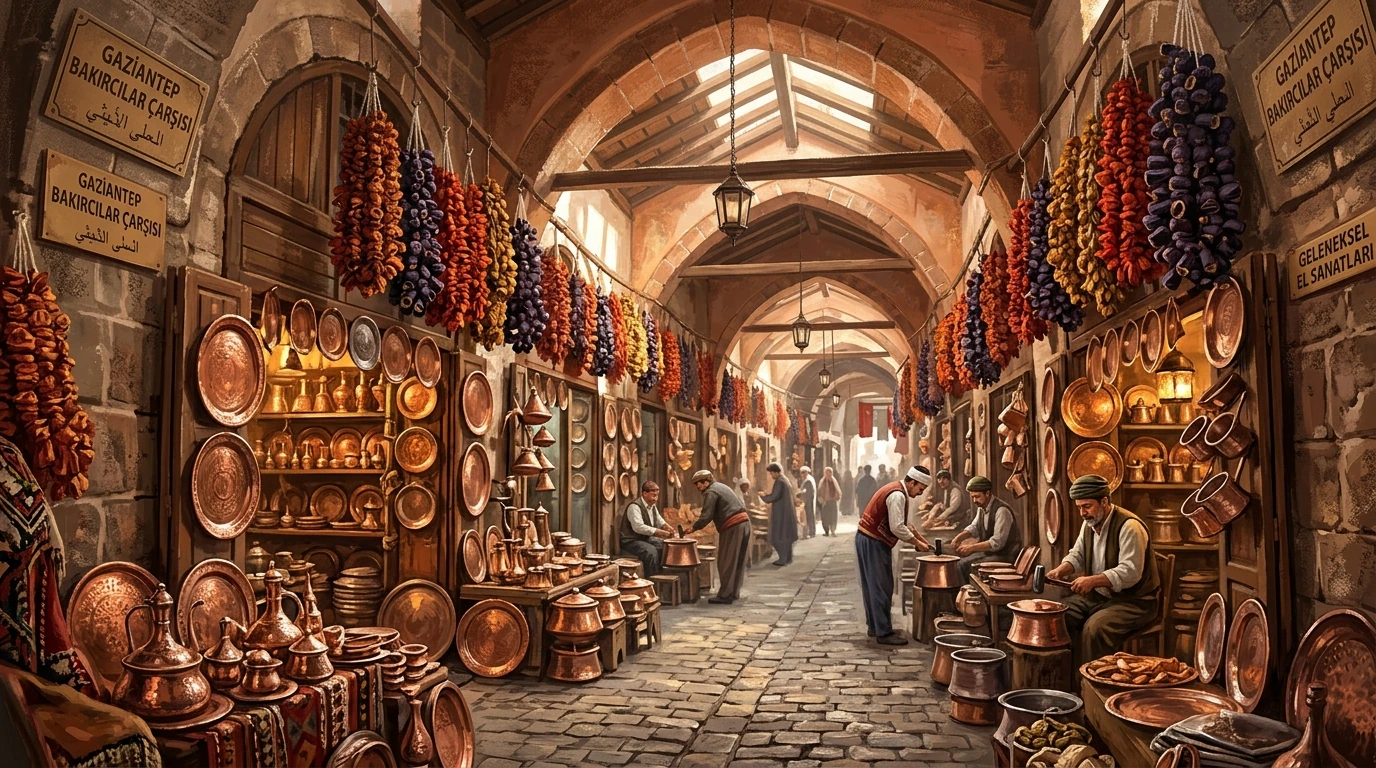
- Shop at Bakırcılar Çarşısı (Coppersmiths' Bazaar): Pick up souvenirs like pistachio-dusted Turkish delight and pistachio paste rolls to take home.
- Book a food tour if you're short on time: Culinary Backstreets and GetYourGuide both run excellent food tours led by local guides who take you to hidden spots you'd never find on your own.
- Cultural tip: "Fıstık" (pistachio) is a common term of endearment in Antep. If someone says "fıstık gibisin" (you are like a pistachio), that's a huge compliment!
- Support local businesses: Many of the city's food spots were damaged in the 2023 earthquakes, and every meal you buy goes directly to supporting the local community's rebuilding efforts.
- Common mistakes to avoid: Don't order baklava made with non-Antep pistachios (always ask for fıstıklı baklava made with Antepfıstığı), don't rush your meals—slow eating is a core part of Antep culture, and don't pair katmer with tea, always opt for lemonade.
Final Thoughts#
Gaziantep isn't just a food destination—it's a living, breathing museum of culinary history, where every recipe has been passed down through generations, and every meal is served with the warm hospitality the region is famous for. Whether you're biting into a buttery piece of baklava, sipping on spicy beyran soup for breakfast, or sharing a plate of grilled kebabs with locals, you're not just eating food—you're taking part in a tradition that's thousands of years old. Skip the rushed 1-day stopover, spend at least 3 days in Antep, and take the time to slow down, savor every bite, and support the local community that's worked so hard to keep their iconic food culture alive.
References#
- BBC Travel (2026). The Turkish city built on green gold. Retrieved from https://www.bbc.com/travel/article/20260316-the-turkish-city-built-on-green-gold
- Museum of Wander. A Food Lover's Guide to Gaziantep. Retrieved from https://museumofwander.com/gaziantep-food-guide-turkey/
- TasteAtlas. Best dishes in Gaziantep Province. Retrieved from https://www.tasteatlas.com/best-rated-dishes-in-gaziantep-province
- UNESCO Creative Cities of Gastronomy. Gaziantep. Retrieved from https://citiesofgastronomy.com/cities/view/59
- Mog and Dog Travels. 26 Must-Try Gaziantep Foods. Retrieved from https://www.moganddogtravels.com/blogs/gaziantep-foods
- Inside Out in Istanbul. Gaziantep Part II. Retrieved from https://www.insideoutinistanbul.com/gaziantep-what-to-eat/
- Food and Travel. Fields of gold – a gourmet guide to Gaziantep. Retrieved from https://foodandtravel.com/travel/gourmet-traveller/fields-of-gold-a-gourmet-guide-to-gaziantep-turkey