If you've ever daydreamed about a Turkish destination that blends 2,300-year-old cliffside tombs, pastel Ottoman wooden houses perched over a glistening green river, and zero of the crowds that pack Istanbul's Grand Bazaar or Cappadocia's hot air balloon launch sites, Amasya is for you. Tucked in a narrow valley between the Pontic Mountains along the Yeşilırmak (Green River), this underrated north-central Turkish city has been continuously inhabited for 7,500 years, served as the capital of the Kingdom of Pontus, was a training ground for Ottoman princes, and is even the birthplace of legendary geographer Strabo. It's also where Mustafa Kemal Atatürk announced the start of the Turkish War of Independence in 1919, and is known across Turkey as the "capital of apples" for its crisp, sweet orchard produce. This guide covers everything you need to plan a perfect trip to Amasya, from its most iconic historic sites to practical local tips.
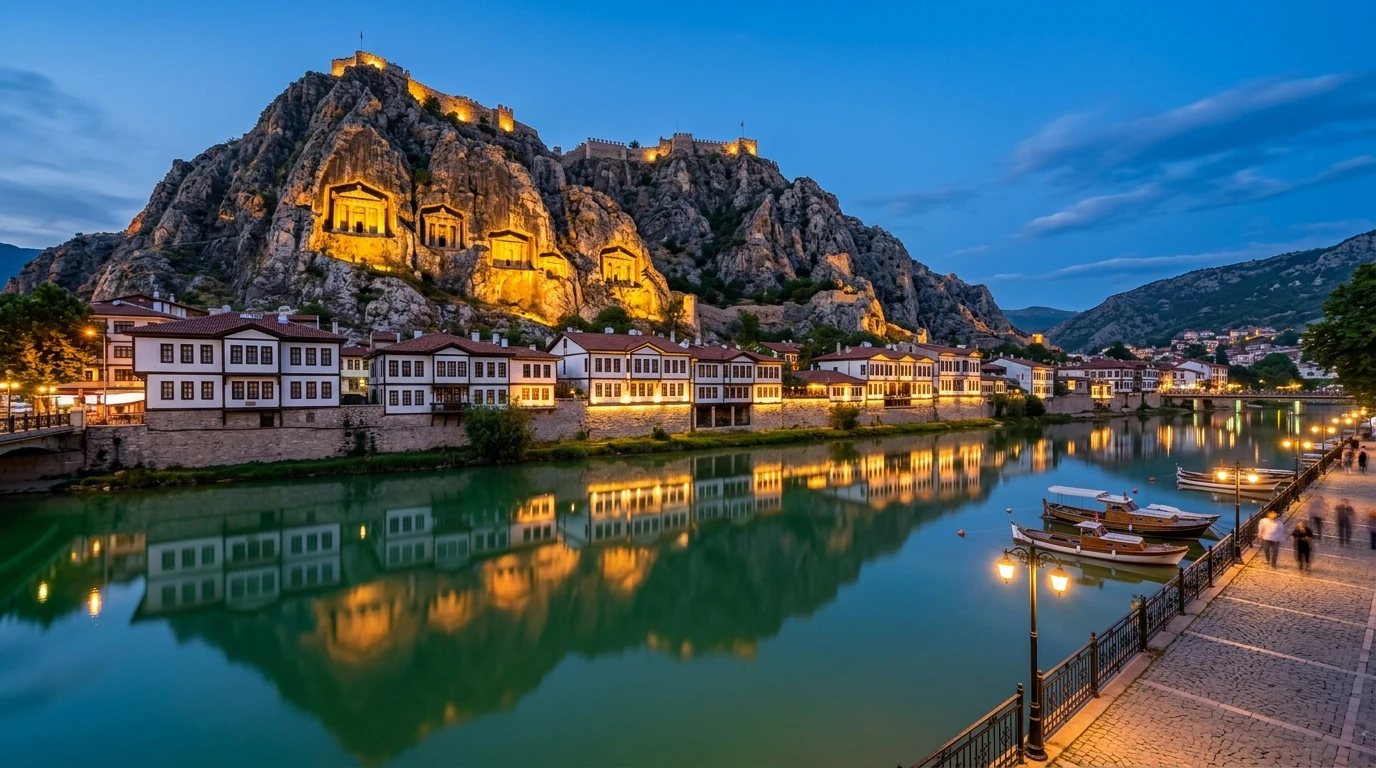
Table of Contents#
- Why Amasya Deserves a Spot on Your Turkey Itinerary
- Must-See Attractions in Amasya
- Pontic Royal Rock Tombs: 2,300-Year-Old Cliffside Monuments
- Ottoman Riverfront Houses (Yalıboyu Evleri): Timbers Perched Over the Green River
- Hazeranlar Mansion: The Crown Jewel of Amasya's Ottoman Architecture
- Amasya Castle (Harşena Kalesi): 5,000 Years of Fortifications
- Sultan Bayezid II Mosque & Complex: The Ottoman Site That Pioneered Music Therapy
- Other Notable Amasya Attractions
- Practical Amasya Travel Guide
- Pro Visitor Tips to Avoid Common Mistakes
- Final Thoughts
- References
Why Amasya Deserves a Spot on Your Turkey Itinerary#
Amasya stands out from Turkey's more popular tourist destinations for its unspoiled charm and layered history:
- It was first settled 7,500 years ago, known as Hakmiş during the Hittite era, before becoming the capital of the Kingdom of Pontus (333–63 BCE)
- In the Ottoman period, it served as a şehzade (prince) training city, where future sultans learned governance before ascending to the throne
- It offers a rare mix of natural beauty (the Pontic Mountains, Yeşilırmak River, and apple orchards) and historic architecture spanning Hittite, Pontic, Roman, Byzantine, Seljuk, and Ottoman eras
- It remains far less crowded than coastal or central Turkish tourist hubs, making it perfect for slow, immersive travel
Must-See Attractions in Amasya#
All of Amasya's core historic sites are within a 15-minute walk of each other, so you can explore the entire city centre on foot in a single day, with extra time for meals and coffee stops.
Pontic Royal Rock Tombs: 2,300-Year-Old Cliffside Monuments#
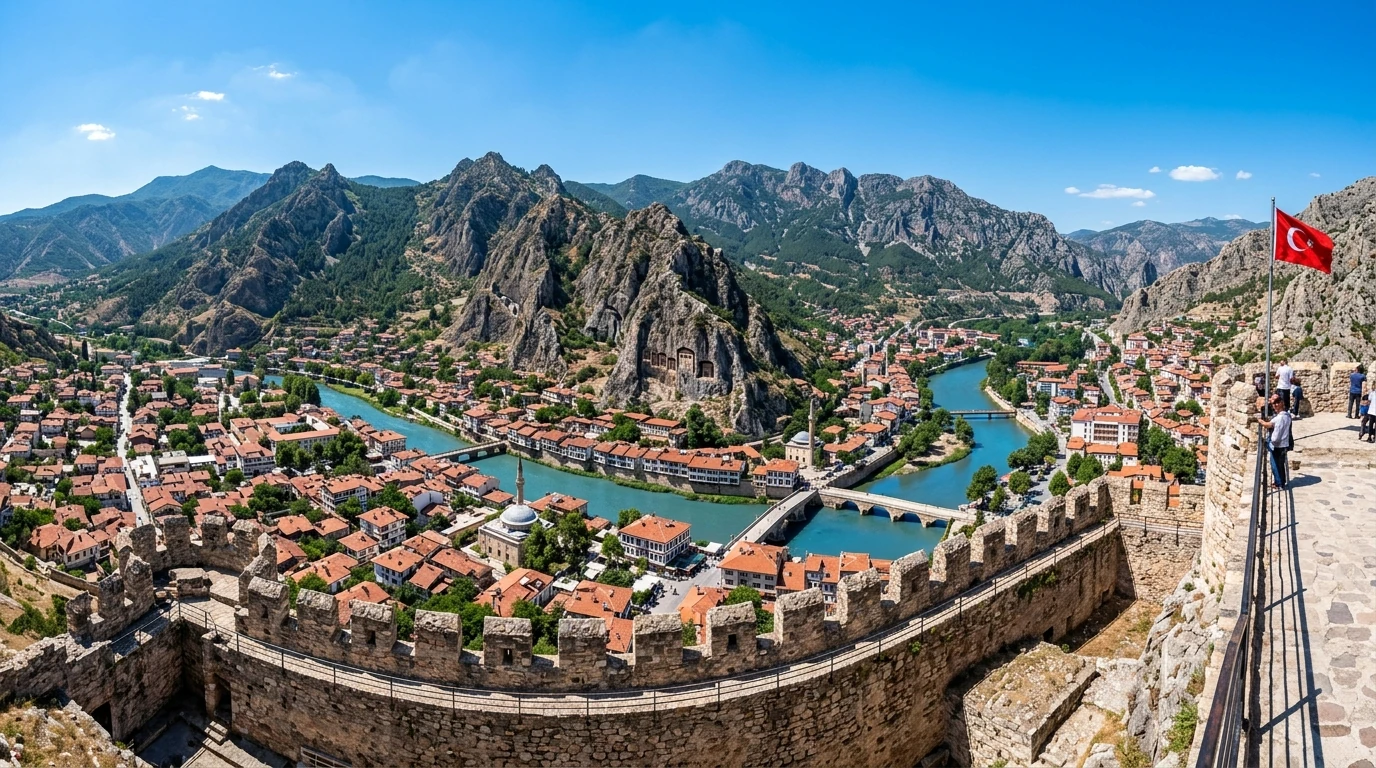
Carved directly into the limestone cliff face above the northern bank of the Yeşilırmak River, these five monumental tombs are Amasya's most iconic landmark. Built between 300 BCE and 200 BCE as burial chambers for the kings of the Hellenistic Kingdom of Pontus (founded by Mithridates I in 281 BCE), the tombs are accessed via a steep stone path and staircase from the riverside.
- The site is part of Mount Harşena and the Rock-tombs of the Pontic Kings, which has been on the UNESCO World Heritage Tentative List
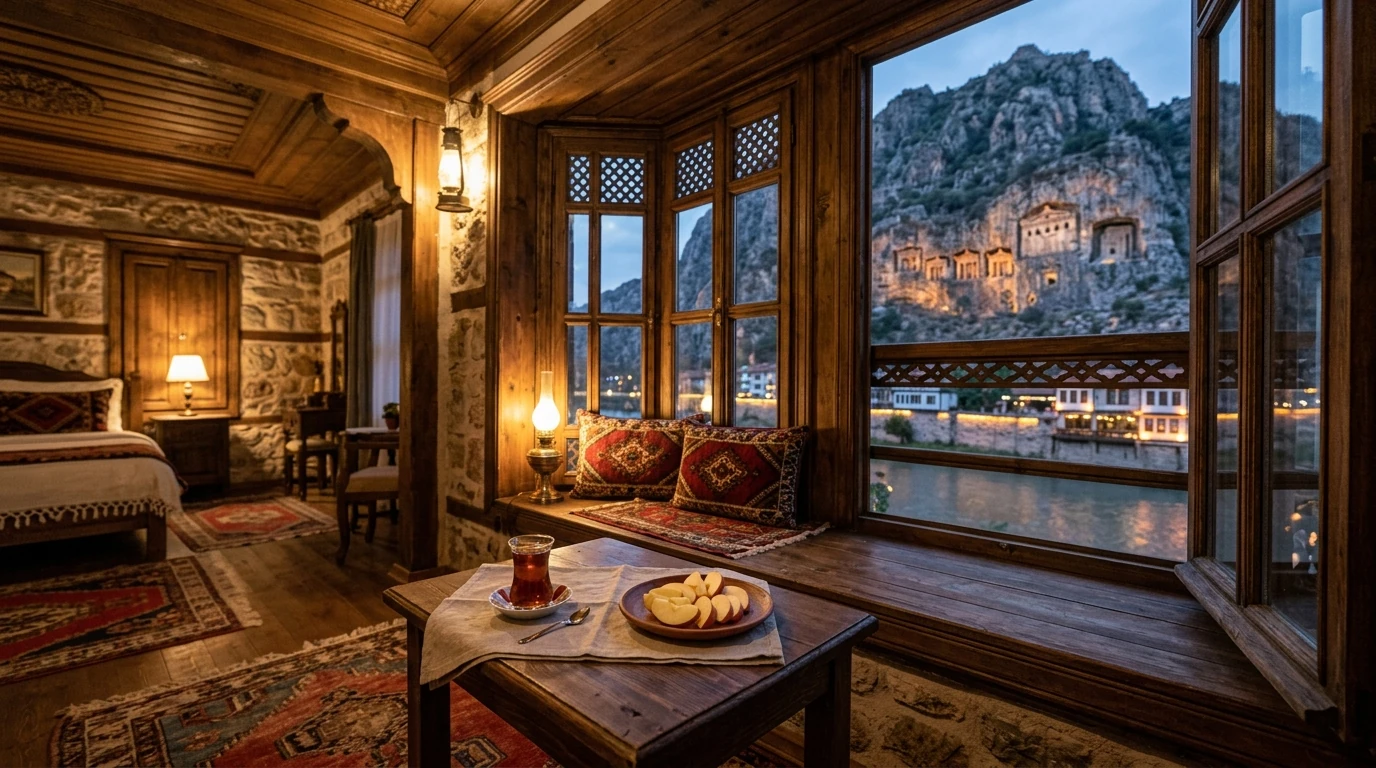
- After dark, floodlights illuminate the cliff face, creating a postcard-perfect reflection in the Yeşilırmak River below
- Pro tip: Visit 30 minutes before sunset to capture golden hour photos of the tombs, then stay 15 minutes after dark to see the floodlights turn on for the iconic evening view
Ottoman Riverfront Houses (Yalıboyu Evleri): Timbers Perched Over the Green River#
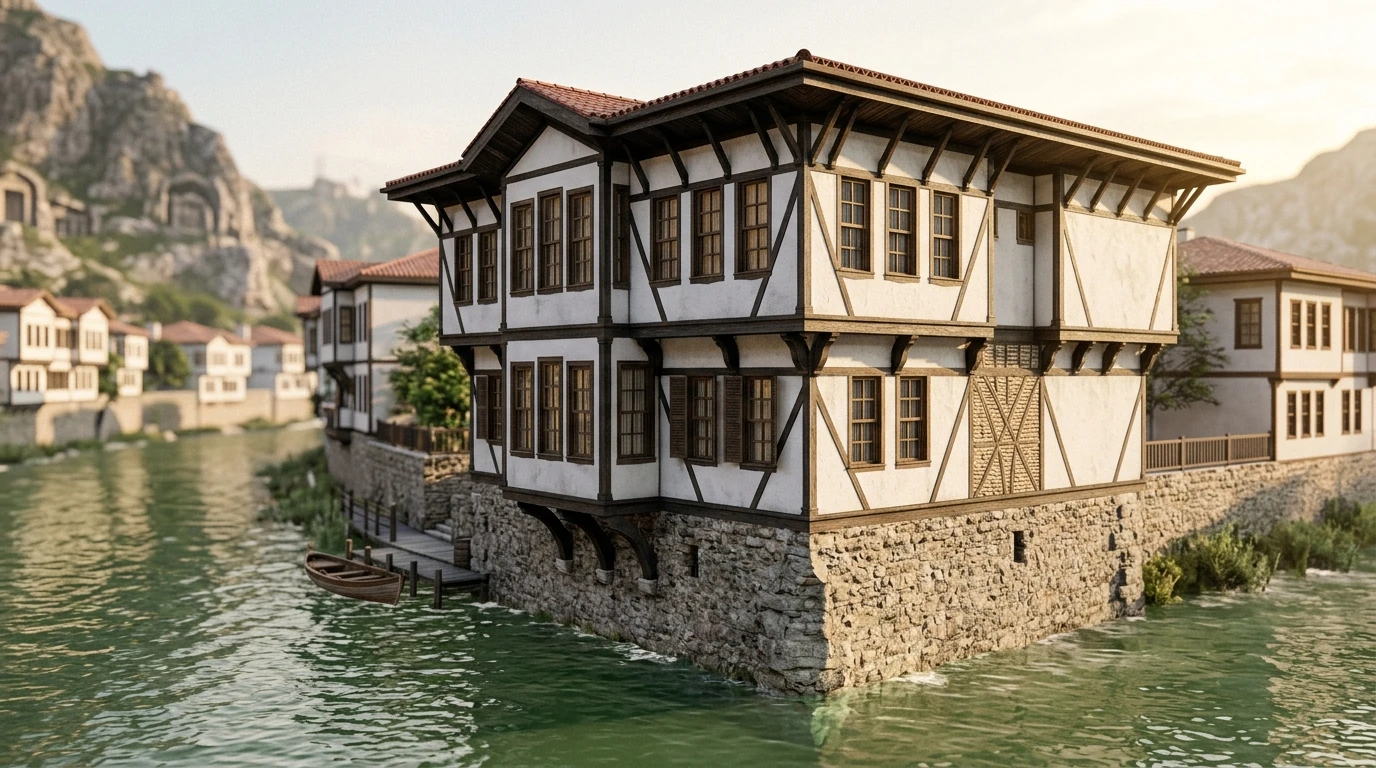
Lining the southern bank of the Yeşilırmak in the Hatuniye Mahallesi district, these restored 19th-century Ottoman timber houses are the city's second most recognizable sight. Built on stone foundations that project directly over the river, they feature classic Ottoman architectural details: timber-framed walls filled with wattle and daub, wide overhanging eaves, hipped or barrel roofs, and crisp white border trim.
- Many of the houses have been converted into boutique hotels, riverside cafes, and small museums showcasing Ottoman-era domestic life
- Staying in one of these converted houses gives you unobstructed front-row views of the Pontic rock tombs across the river
Hazeranlar Mansion: The Crown Jewel of Amasya's Ottoman Architecture#
The most famous of the Yalıboyu houses, Hazeranlar Mansion was built between 1864 and 1872 by wealthy local merchant Hasan Talat Efendi. The mansion suffered severe damage during the 1939 Erzincan Earthquake and repeated Yeşilırmak floods in 1944, 1948, and 1952, before the Turkish Ministry of Culture launched full restoration works in 1976.
- Today, it houses an ethnographic museum with fully preserved 19th-century Ottoman domestic interiors (including original furniture, textiles, and kitchen tools) and a rotating contemporary art gallery
- Entry is affordable, and guided tours are available in English and Turkish
Amasya Castle (Harşena Kalesi): 5,000 Years of Fortifications#
Perched at the top of the cliff directly above the Pontic rock tombs, Amasya Castle's first fortifications date back to the Early Bronze Age, with later additions and rebuilds by Pontic, Byzantine, Seljuk, and Ottoman rulers.
- The castle features 8 layers of defensive fortifications, a 150-meter-long tunnel carved directly into the rock, and ancient cisterns that once supplied water to the fortress during sieges
- The panoramic view from the castle walls over the entire Yeşilırmak valley, Ottoman riverfront houses, and surrounding apple orchards is the best in the city
Sultan Bayezid II Mosque & Complex: The Ottoman Site That Pioneered Music Therapy#
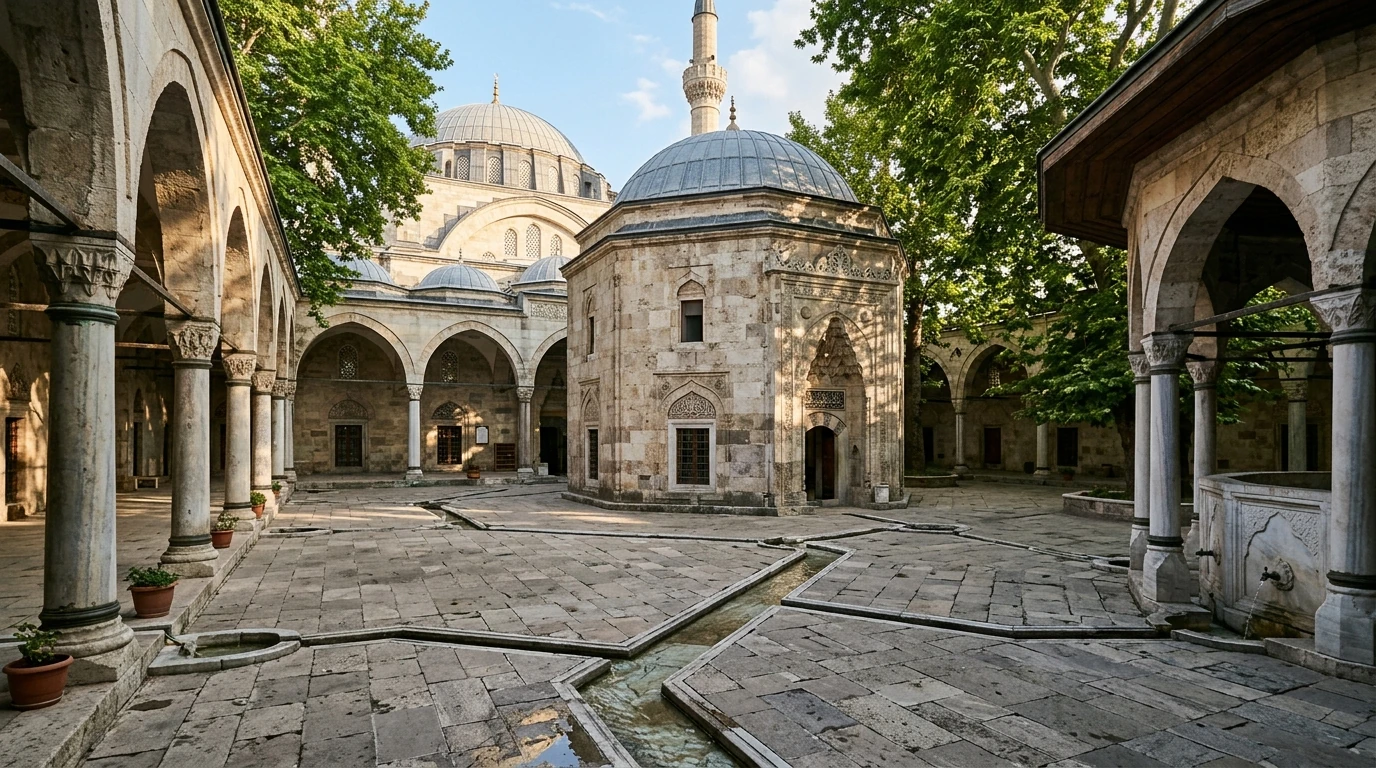
Built between 1481 and 1486, this sprawling complex is one of the most underrated historic sites in Turkey, famous for its pioneering approach to mental health care. In addition to a mosque, madrasa, library, public fountain, soup kitchen, astronomer's house, and hamam (bathhouse), the complex includes an octagonal Darüşşifa (hospital and asylum) where mentally ill patients were treated with formal music therapy as early as the 15th century.
- Water channels carved into the courtyard floor and the building's custom acoustic design were built to amplify the sound of traditional Ottoman music used for treatment
- It is one of the earliest documented examples of music being used as a formal medical treatment anywhere in the world
Other Notable Amasya Attractions#
If you have extra time to explore, these smaller sites are all within walking distance of the city centre:
- Amasya Museum: Houses artefacts spanning 7,500 years of local history, including Hittite bronze standards, Pontic-era coins, illuminated Ottoman manuscripts, and rare Ilkhanid (Mongol) period mummies
- Gök Medrese Camii: A 13th-century Seljuk mosque built for governor Torumtay
- Burmalı Minare Camii: A Seljuk-era mosque famous for its intricately carved spiral minaret
- Gümüşlü Camii (Silver Mosque): A 14th-century early Ottoman style mosque
- Bayezid Paşa Mosque: Built in 1419, its architectural style foreshadows the famous Green Mosque in Bursa
- Büyük Ağa Medresesi: Built in 1488 by the chief eunuch of Sultan Bayezid II
Practical Amasya Travel Guide#
How to Get to Amasya#
- By air: The nearest airport is Amasya Merzifon Airport (MZH), located 55 km west of the city centre, with limited daily flights from Istanbul. Shared shuttles from the airport to the city centre are available.
- By bus: Regular intercity buses run to Amasya from all major Turkish cities: Ankara (5 hours), Samsun (2.5 hours), Tokat (2 hours), and Çorum (2 hours). Most bus companies offer free shuttle service from the bus station to the city centre.
- By train: The line from Sivas to Samsun runs through Amasya. Travel time to Sivas is about 5.5 hours and to Samsun about 3 hours. Train timetables in Turkey change frequently, so check current schedules before planning.
- By car: Amasya sits at the junction of routes between the Black Sea coast and the interior, making it a natural stop on circuits through northern and eastern Turkey. Coming from Ankara, follow the Samsun route through Kırıkkale, Sungurlu, and Çorum (approximately 335–358 km).
Best Time to Visit Amasya#
The optimal times to visit are:
- Spring (April–June): Mild temperatures, blooming apple orchards, and low tourist crowds
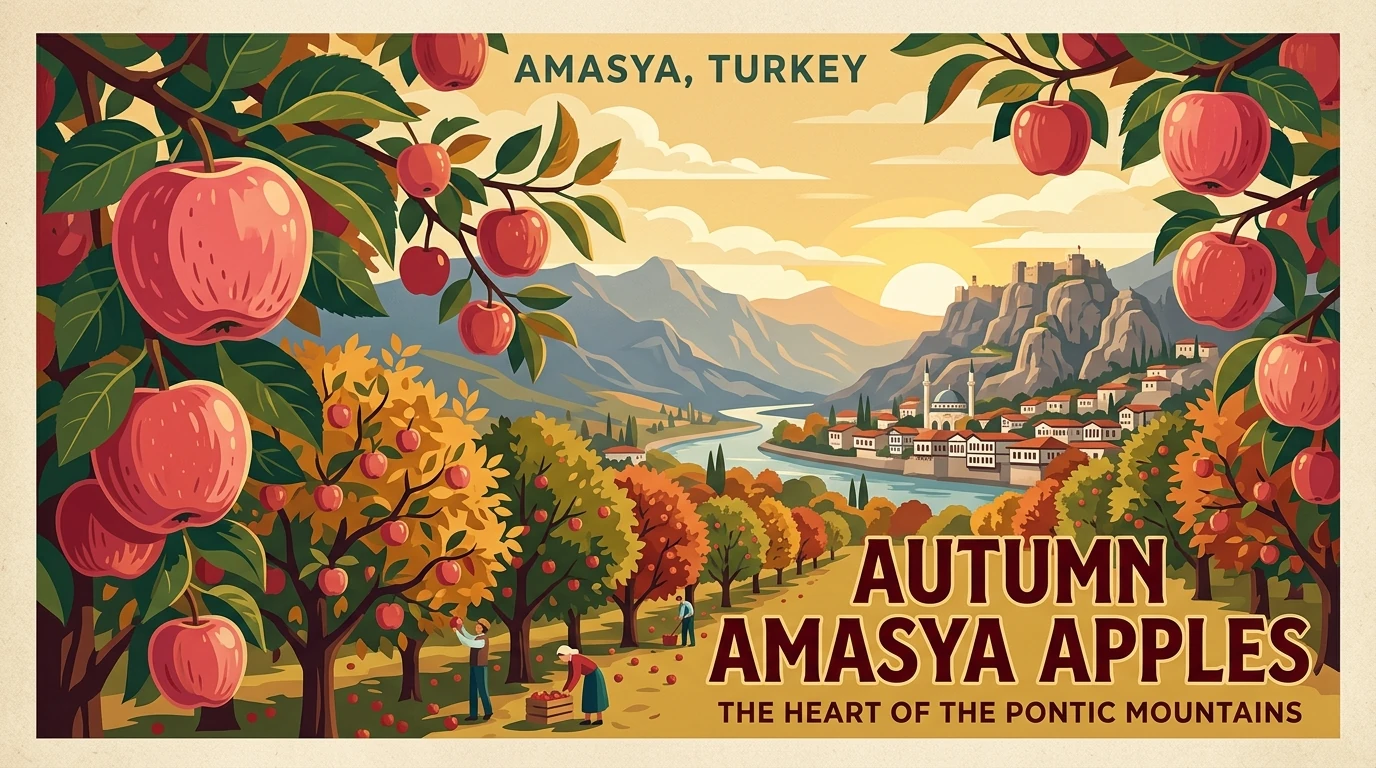
- Autumn (September–October): Harvest season, with fresh Amasya apples available everywhere, golden light perfect for photography, and cool, dry weather
- The valley orientation creates its own microclimate — sheltered from wind and warm in spring
- Avoid visiting in winter when heavy snowfall can occasionally close mountain roads, though the snow-dusted cliff tombs and Ottoman houses make for stunning photographs
Where to Stay in Amasya#
- Boutique/mid-range: Book a room in a converted Ottoman Yalıboyu house on the southern riverbank. Most options include balcony views of the rock tombs and homemade breakfast with local apples.
- Budget: Small guesthouses on the southern (modern) side of the river are a short walk from all historic sites
- Accommodation in Ottoman house conversions offers rooms with direct cliff-tomb views — a truly unique experience
What to Eat in Amasya#
Don't leave without trying these local specialties:
- Keşkek: A hearty, slow-cooked porridge made from wheat and shredded meat, often served at local festivals and family gatherings
- Amasya apples: Crisper and sweeter than other Turkish apple varieties, you can buy fresh apples, apple jam, apple tea, and apple baklava from local markets and roadside stands
- Kömbe: A flaky, buttery local pastry filled with cheese or minced meat
Pro Visitor Tips to Avoid Common Mistakes#
- Wear sturdy walking shoes: The path up to the rock tombs and castle is steep and rocky, so avoid flip-flops or thin-soled shoes.
- Split your time between the two river banks: The northern bank is home to most tourist attractions (tombs, castle, Ottoman houses), while the southern (modern) bank has larger shops, banks, ATMs, and the Amasya Museum.
- Plan for a 1-night stay: While you can see all main sites in a single day, staying overnight lets you experience the iconic evening view of lit tombs reflected in the river, and catch the sunrise over the valley.
- Avoid midday hikes in summer: The path up to the castle is fully exposed to the sun, so hike in the early morning or late afternoon to avoid heat exhaustion.
- Buy apples directly from farm stands: If visiting in autumn, stop at a roadside orchard stand outside the city centre for fresh Amasya apples at half the price of tourist shops.
- Don't skip the evening river walk: The riverside promenade is lined with cafes and street food stalls, and the lit tombs reflected in the water are Amasya's most magical experience.
Final Thoughts#
Amasya is one of Turkey's best hidden gems, offering a rare mix of 7,500 years of history, stunning natural beauty, and unspoiled local culture without the crowds of more popular tourist destinations. Whether you're a history buff fascinated by Pontic royal tombs and Ottoman music therapy, a food lover chasing the perfect Amasya apple, or a traveler looking for a slow, off-the-beaten-path stop on your Turkish itinerary, this city will exceed your expectations.
References#
- Serendipity Turkey. "Amasya Travel Guide — Pontic Royal Tombs & Ottoman Houses." Serendipity Tours Turkey. Retrieved from https://serendipityturkey.com/turkey-guide/amasya/
- UNESCO World Heritage Centre. "Mount Harşena and the Rock-tombs of the Pontic Kings." UNESCO Tentative List. Retrieved from https://whc.unesco.org/en/tentativelists/6039/
- Turkish Archaeological News. "Amasya." Turkish Archaeological News. Retrieved from https://turkisharchaeonews.net/city/amasya
- Turkish Museums. "Amasya Hazeranlar Mansion." Turkish Museums. Retrieved from https://www.turkishmuseums.com/museum/detail/1938-amasya-hazeranlar-mansion/1938/4
- Turkish Archaeological News. "Hazeranlar Mansion in Amasya." Turkish Archaeological News. Retrieved from https://turkisharchaeonews.net/museum/hazeranlar-mansion-amasya
- Turkish Archaeological News. "Tombs of the kings of Pontus in Amasya." Turkish Archaeological News. Retrieved from https://turkisharchaeonews.net/site/tombs-kings-pontus-amasya
- Amasya Governor's Office. "The Kings' Rock Tombs." Republic of Turkey. Retrieved from https://amasya.ktb.gov.tr/EN-262598/the-kings39-rock-tombs.html
- Amasya Governor's Office. "Hazeranlar Mansion (Ethnography Museum)." Republic of Turkey. Retrieved from https://amasya.ktb.gov.tr/EN-259003/hazeranlar-mansion-ethnography-museum.html